This is vintage Diana Ross, circa 1970: the cusp of her transition from Head Supreme to Miss Diana Ross, solo diva. Not only were The Supremes the top American singing group of the 60s, but they were also style leaders. Glamour was always important to them, and Diana had even planned to be a fashion designer before the music thing took off. In the early days of The Supremes—long before Motown started supplying couture gowns—Diana was the one who designed and made the dresses, supervised the hair and makeup, and created the overall high-fashion look that was the group’s signature.
By 1969 the Supremes were wearing fabulous gowns by Bob Mackie, a trend Diana continued into her solo career. That’s the look we’re going for here: sequins, halter neck, feather boa. You can do this as a solo Diana Ross costume or rope two friends into dressing up with you and go as the Supremes.
The pieces we suggest, from left to right:
1. Halter neck sequin gown in burgundy.
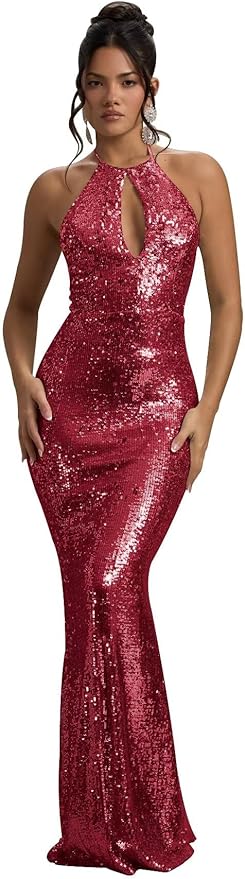
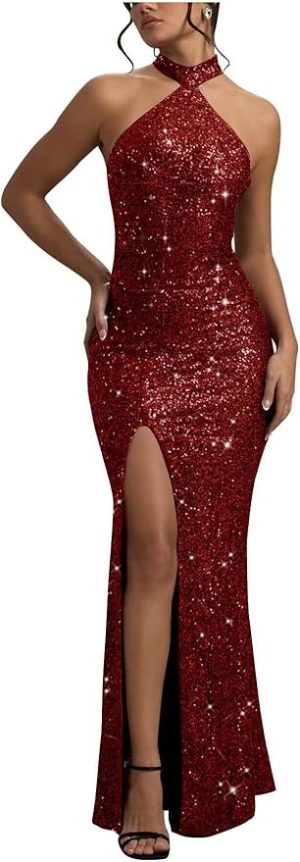
2. Alternate choice: Halter neck sequin gown with front slit. The halter on this dress is more vintage looking, but the front slit is totally modern. Well, you can’t win ’em all.
3. Fabulous feather boa in coral pink.
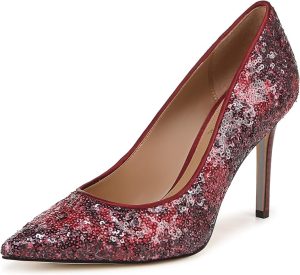
4. Burgundy sequin pumps. You want closed toe pumps with stiletto heels, in a color that’s as close to your dress as you can get.
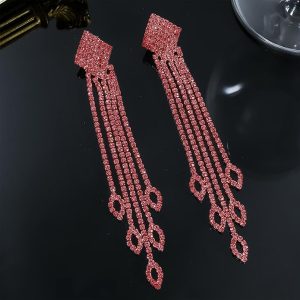
5. Ruby-colored rhinestone tassel earrings.
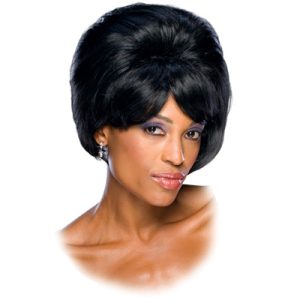
6. Optional: Dreamgirls wig. If you don’t have hair that will lend itself to a late 60s beehive, this wig will fix you up.


Mae West (1893-1980) was ahead of her time. Way ahead of her time. She’s probably remembered primarily as a zaftig sex symbol, but she was so much more than that. She was a playwright, screenwriter, actress, and producer who consistently broke boundaries in her frank treatment of sexual and social themes. Far from being an ingenue playing a role scripted for her by Hollywood, Mae West was a self-created artist and businesswoman who controlled her own persona. In the 1920s she was a sensation on Broadway, starring in her own self-written plays (which once landed her in jail for “public obscenity”). Then she moved to Hollywood, where she created star vehicles featuring her own screenplays (again running afoul of the censors). Off-screen, too, she was an independent woman who refused to be tied down into domesticity—or to apologize in any way for her liberated lifestyle.
Mae’s look was a distinctive mash-up of styles evocative of the Gay Nineties (that’s the 1890s): hourglass dress, picture hat, feathers. Plus 1920s bleached blonde hair set in Marcel waves. The pieces we suggest:
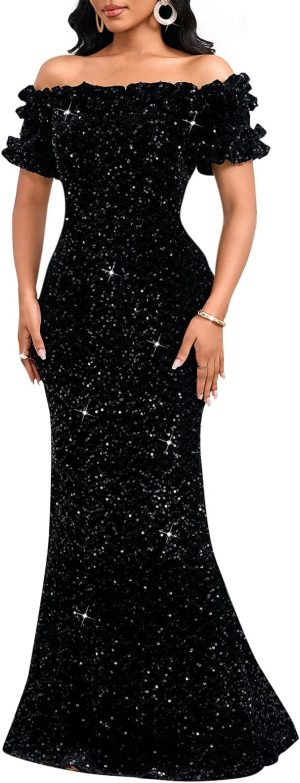
1. Black sequin off-shoulder gown with short sleeves. This dress is perfect for recreating Mae’s style. A sturdy foundation garment will help you create that smooth hourglass look.
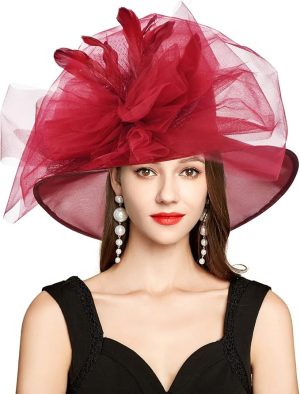
2. Burgundy organza picture hat with feathers. You’ll want to wear this cocked back on your head a bit to frame your face.
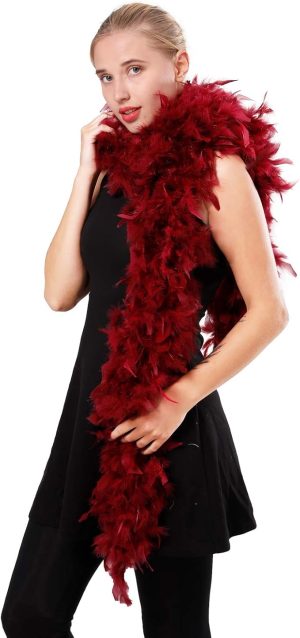
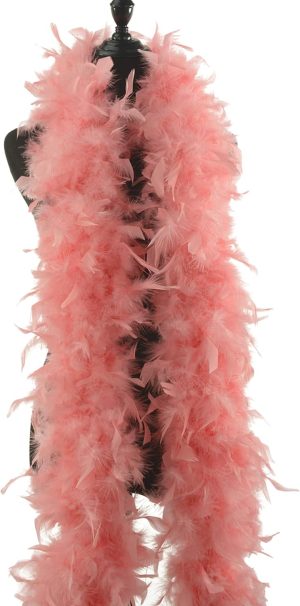
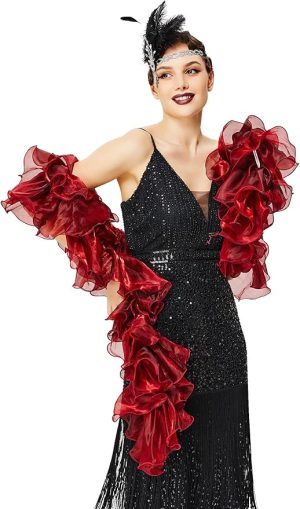
Alternate choice: if you don’t feel like dealing with feathers, an organza boa in the same shade could look nice:
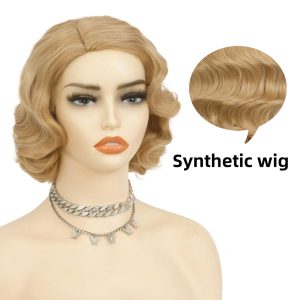
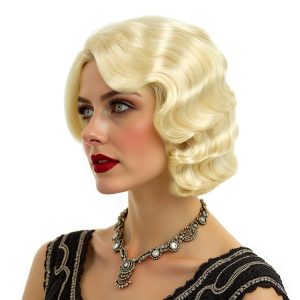
4. Blonde 1920s wig. Mae West wore her hair in Marcel waves, which were deep crimped waves set by a curling iron. There was no softness to her waves, so if you’re using a wig or setting your own hair, don’t fluff it out.
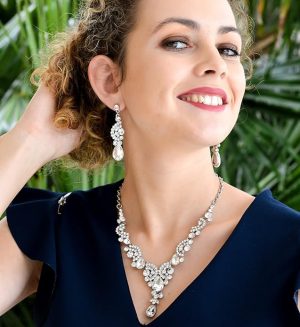
5. Rhinestone necklace and earring set. Diamond Lil!
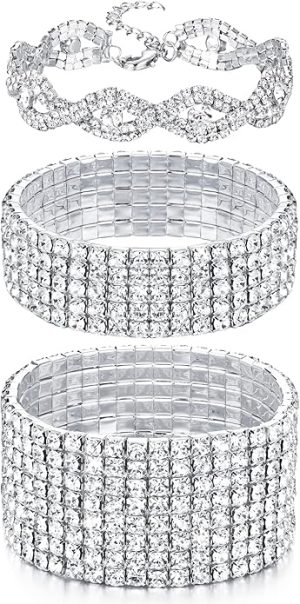
6. Rhinestone bracelets. The more the merrier!

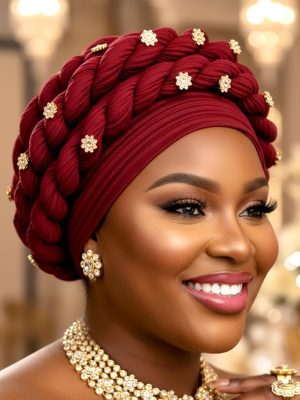
Amina (ca. 1533-1610) was a brilliant warrior queen of the northern Nigerian Hausa state of Zaria. She is remembered in song as “a woman as capable as a man,” which is rather understating the matter, seeing as how Amina was the greatest ruler and warrior in Nigerian history. For our illustration we’ve used three images of Amina: the painting on the bottom is by Floyd Cooper (for Budweiser’s “Great Kings and Queens of Africa” series), the one on the top is by Erhabor Emokpae, and the image on the right is an official Nigerian stamp from 1975.
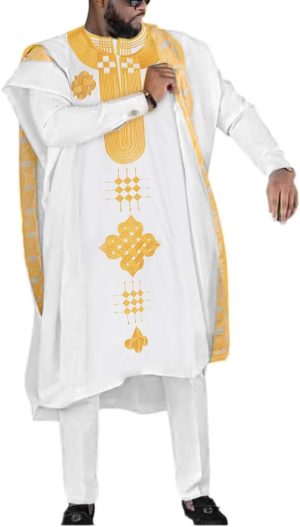
Now, for the costume: basically, you need a babban riga, or as it’s more popularly known outside Nigeria, a grand boubou. This voluminous multi-layered outfit is now worn by men throughout West Africa, but it was originally the clothing of the northern horsemen. Since Amina was very much a horse-riding, weapon-wielding queen, that’s probably the kind of thing she wore. If a friend or relative already has a grand boubou you can borrow, you’re in luck. If not, you can search for a used one on eBay or buy a new one (link below). As for Amina’s headgear, Floyd Cooper (the Budweiser artist) shows her in a very sultan-ish turban, which we think is a nice touch. This was the 16th century, after all, and Amina was definitely living in a world of sultans and emirs.
The pieces we suggest, from left to right:
1. White Grand Boubou set with gold embroidery.
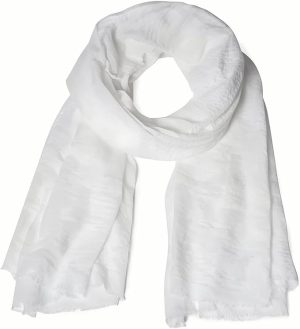
2. Gauzy white scarf. We suggest using this as a sort of under-turban: loop it loosely under your chin and pin it at the top of your head to get the effect of a Hausa turban. Then wear the next item over it.
3. Jeweled red turban. Wear this over your gauzy scarf. Very regal!
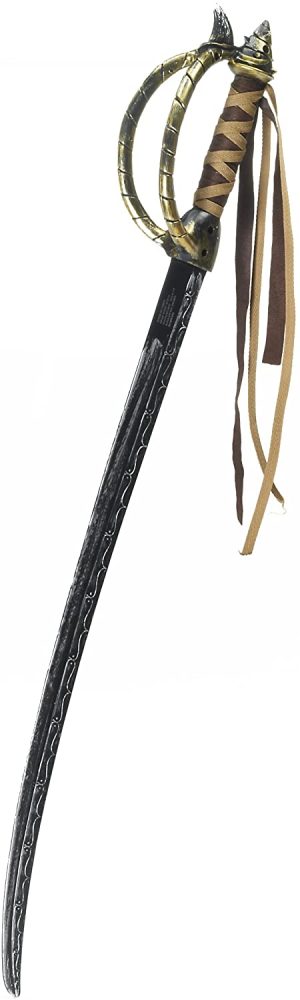
4. Costume sword. You can wear a leather belt to hold it.
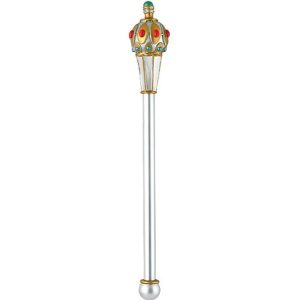
5. Costume scepter. Note that this is only 19 inches long, so it’s very much just a waving-around-for-show scepter.
Shoes: We suggest boots if you have them. Hausa horsemen today wear a variety of footwear, from boots to open sandals, but the boots just look so great:


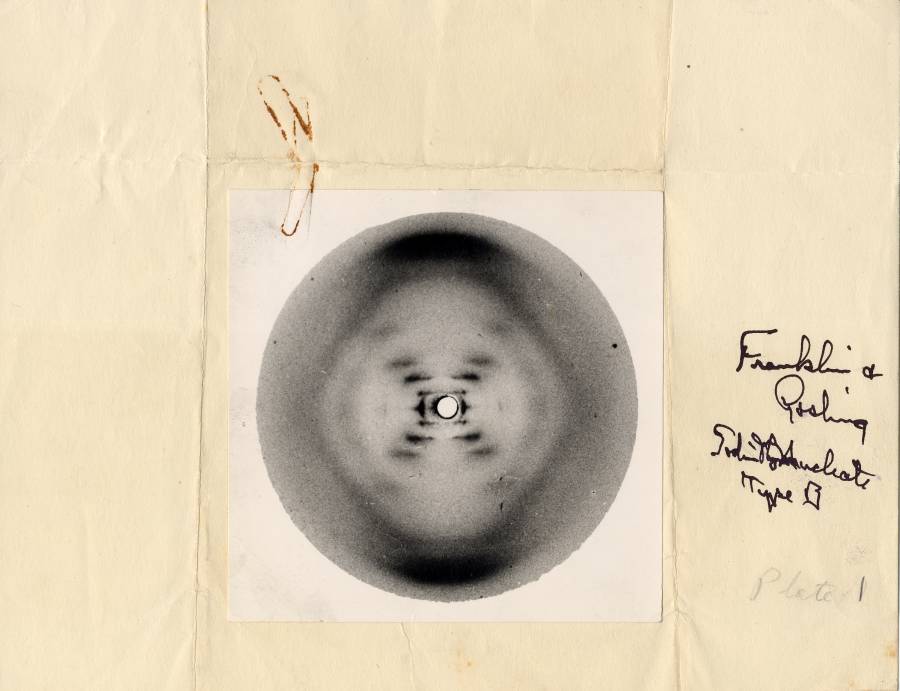
In May 1952, Rosalind Franklin (1920-1958) made a photograph. It wasn’t just any photograph: it was an X-ray diffraction image of the DNA molecule. Labeled “Photo 51,” it would prove to be the crucial piece of data in unraveling the double helix structure of DNA. Unfortunately, Franklin never got the credit she deserved. Her resentful male colleagues—who seemed to feel that women had no business being brilliant scientists—conspired to purloin her data behind her back. When James Watson and Francis Crick made their big announcement in 1953 unveiling the structure of DNA, they carefully omitted any mention of the fact that it was their unauthorized access to Franklin’s research that had given them the key.
Rosalind Franklin died of ovarian cancer in 1958, so she never learned that she’d been cheated of credit for her role in one of the greatest breakthroughs in science. After her death—and after Watson, Crick, and co-conspirator Maurice Wilkins had received Nobel Prizes for the discovery of DNA—James Watson went on to write a bestselling book in which he ridiculed Franklin as an unimaginative clod and a frump. He also spent the next 40 years bloviating about the inferiority of people who aren’t white males, leading to the inescapable conclusion that Mr. James Watson is not what you might call a reliable narrator. In fact his entire portrait of Rosalind Franklin was false. Since this is a costume project, we’re especially interested in the part about her being a frump.
Now, there’s nothing wrong with being a frump. Most male scientists are pretty darn frumpy, and it’s absurd that a female scientist should be held to a different standard. But the irony is that Rosalind Franklin wasn’t a frump. She was actually very, very chic. She cared about clothes, and avidly followed the latest Paris fashions. Friends remembered her as always being beautifully turned out, wearing Dior’s “New Look” silhouette and well chosen accessories.
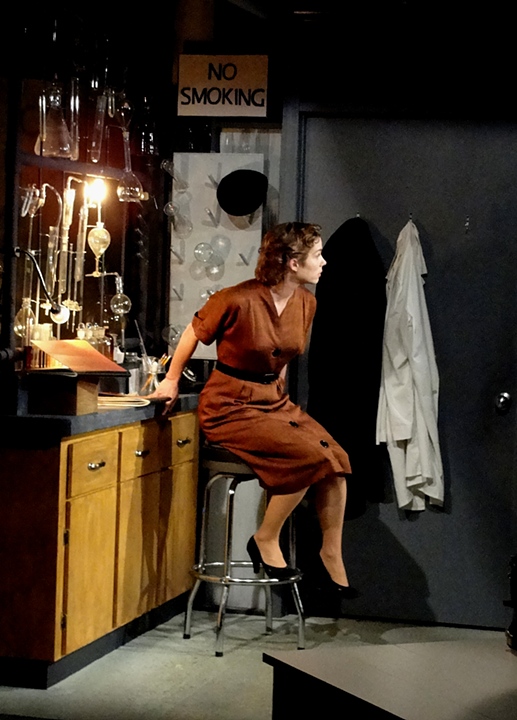
Modern theatrical productions usually portray Franklin as a stylishly dressed lady in a lab coat, which seems pretty close to the mark. For example, here’s Kristen Bush as Rosalind Franklin in the Ensemble Studio Theatre production of “Photograph 51” by Anna Ziegler, costume design by Suzanne Chesney (photo credit: Suzanne Chesney):
And here’s Elizabeth Rich as Rosalind Franklin in the Theatre J production of “Photograph 51” by Anne Ziegler, costume design by Luciana Stecconi (photo credit: Stan Barouh):
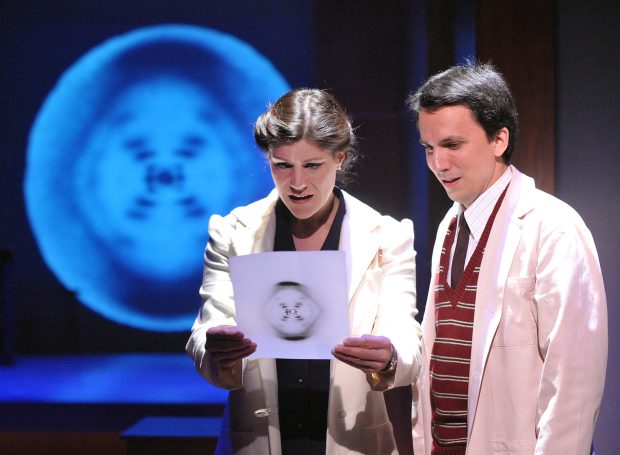
We suggest you go for the same effect. Here are the items you need:
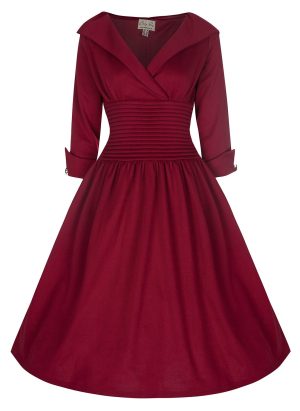
1. 1950s style dress. This is a vintage Lindy Bop “Ramona” shawl-collar dress, and it is just the sort of sophisticated thing Rosalind would have worn. It even has that elegant shawl collar she liked. You can search for a retro-style dress from a modern manufacturer or hunt for a vintage piece on a place like eBay or Etsy. (Look for a “1950s shirtwaist dress.”) You could also just wear a skirt-and-blouse combo that’s conservative enough to pass for the 50s.
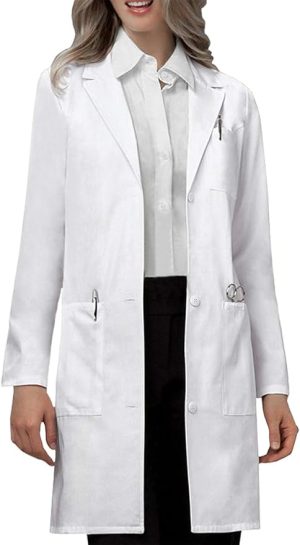
2. Lab coat. Fortunately, lab coats haven’t changed much in the past 60 years. A long modern coat like this will work fine.
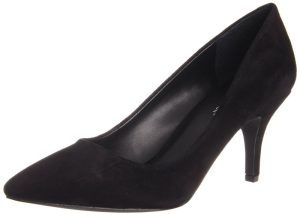
3. Black suede stiletto heels. The quintessential 50s shoe.
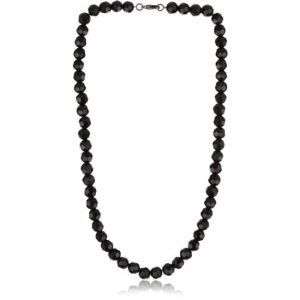
4. Jet bead necklace from 1928 Jewelry. Jet jewelry was popular in the 50s, and this 18-inch necklace looks a lot like the one Rosalind is wearing in several photographs. Graduated pearls or beads would also be a good choice.
5. Photo 51. This is it: the original Photo 51, now held in the Ava Helen and Linus Pauling Papers at Oregon State University. (No one is sure how Linus Pauling ended up with it, but speculation is that Rosalind gave it to him when he visited her in London.) Click for a full-size version you can print out and carry with you:
And furthermore: Rosalind Franklin was a brilliant scientist whose contribution to DNA research went far beyond just taking a great X-ray image. Within a few months of beginning work on the DNA molecule, she discovered that it had two forms, A and B. This was critical for deciphering the structure. She correctly argued that the sugar-phosphate backbone had to be on the outside with the bases pointing in, held together by hydrogen bonds. By the spring of 1953 she had identified the double helix structure, and made precise measurements of the diameter, separation, and pitch of the helices. All this was part of the model presented by James Watson and Francis Crick as their own work.
The definitive biography of Franklin is Brenda Maddox’s Rosalind Franklin: The Dark Lady of DNA. For a shorter take but one that is chock full of goodness on the hard science stuff, read “Rosalind Franklin and the Double Helix,” an article by biologist Lynne Elkin. The website for the NOVA documentary Secret of Photo 51 also has a wealth of information. And thanks to YouTube, you can watch the whole program online:

Movie star by day, genius inventor by night: it sounds unbelievable. But it’s true. Hedy Lamarr (1914-2000) was an extremely intelligent woman with the mind of an engineer. Being a movie star bored her; what she really wanted to do was invent things. She set aside a room of her house as her workshop, with a drafting table and shelves of books on electrical engineering. Her great idea in World War II was what she dubbed “frequency hopping,” which involved switching the frequencies in radio transmissions to prevent jamming. Hedy’s plan was to develop this into a radio guidance system for Allied torpedoes, one that would be impervious to Nazi interference. She mentioned the idea to composer George Antheil, who proposed using a perforated roll of paper, similar to a player piano roll, to synchronize the frequency hopping.
Hedy and George patented their invention and offered it to the Navy, but Washington balked. Fifteen years later, though, the idea was taken up by engineers at Sylvania, who replaced the paper rolls with electronics. Frequency hopping became the basis for secure military communications systems, and was used on the ships that blockaded Cuba in 1962. And now, of course, it’s the technology that underlies cellphones, WiFi, Bluetooth, and GPS.
So what does a Hedy Lamarr costume look like? We suggest you model yourself after the dramatic publicity photos of Hedy in a strapless gown with lace gloves and a giant hat. Those pictures were taken in October 1943, just a year after the frequency hopping patent was issued. The items we suggest:
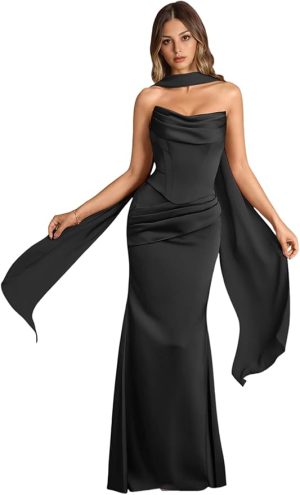
1. Strapless gown in black satin with a scarf. You don’t need the scarf, but you could tie it around your hat (next item).
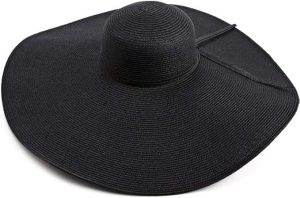
2. Wide-brim black hat. This wonderfully gigantic hat has an adjustable sizing tie to help it fit your head.
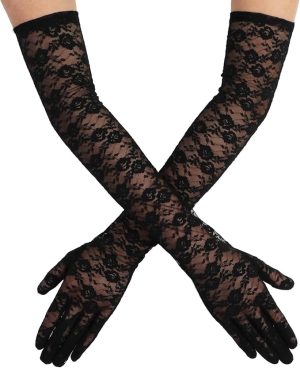
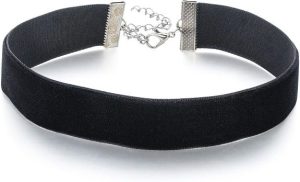
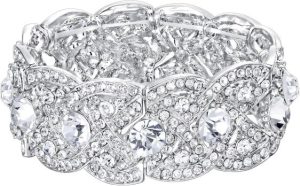
5. Stretch silver bracelet with rhinestones. This bracelet is an inch wide and looks great over gloves.
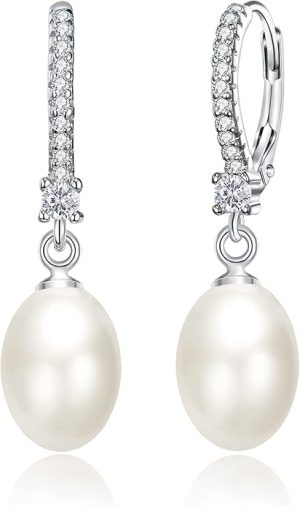
Cellphone: You have one, right? So carry it with you and tell everyone you’re the genius who made it possible. Bonus points if you can do this with an Austrian accent.
Learn more: The book shown in our main illustration is Hedy’s Folly: The Life and Breakthrough Inventions of Hedy Lamarr, the Most Beautiful Woman in the World, by Richard Rhodes.
Main illustration credits: The publicity photos of Hedy Lamarr were taken by Laszlo Willinger on October 6, 1943. The background images are of Hedy’s patent for frequency hopping (Patent Number US2292387), which was issued on August 11, 1942. The edition of the Stars and Stripes is dated November 19, 1945.

Radioactivity. It was Marie Curie (1867-1934) who coined the word. She had a right to: she discovered the stuff (along with her husband, Pierre Curie, and Henri Becquerel). She was the first woman to win the Nobel Prize, the first person to win two Nobel Prizes, and is still the only person in history to have won Nobel Prizes in two different scientific fields. First she won it in Physics in 1903 for the discovery of radiation—that was the shared prize with Pierre and Becquerel. Then in 1911 she won the solo prize in Chemistry for her discovery of the elements radium and polonium. Marie freaking Curie, everybody!
The great thing about a Marie Curie costume is that she is so famous, all you really need is a long black dress and a few key props. By which we mean radioactive-looking props, since Madame Curie was soaking in it. It was a long time before people realized that radiation was deadly, so Marie spent years handling radioactive material, carrying it in her pockets, holding it in her hands, looking at it for fun, even keeping a vial of the stuff next to her bed as a nightlight. The items we suggest:
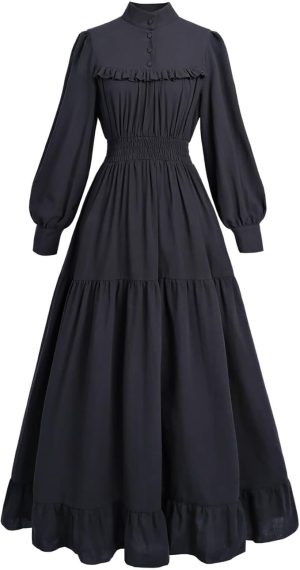
1. Late Victorian/Edwardian dress in black. This simple high-necked dress looks exactly like the kind of thing Marie Curie wore every day in her lab.
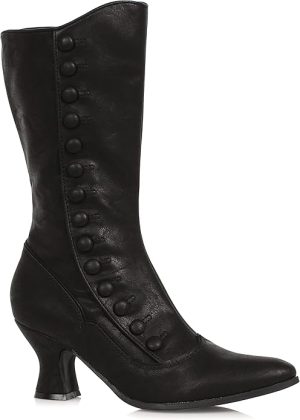
2. Victorian/Edwardian button boots in black. Love these boots.
3. Glow Sticks. People think of radiation as glowing green, but actually radium gives off a cool blue light. Whether you choose blue or green, glow sticks are an easy prop for that radioactive look.

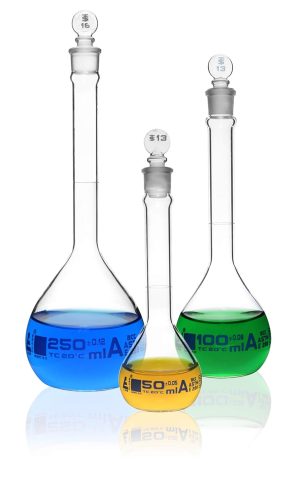
4. Volumetric flasks. If you want something that looks more authentically scientific than glow sticks, fix up some flasks with blue liquid inside (next).
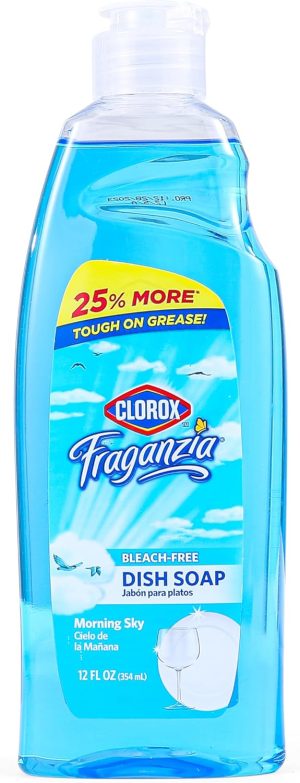
4. Blue dish soap. Something like this would look good in your flasks. You can also try bubble solution or Kool-Aid.
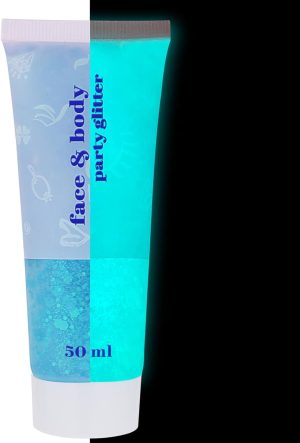
6. Optional: Neon blue glitter gel. You could use this in a lot of ways: in your flask, dabbed here and there on your person, that sort of thing. Silly but fun.

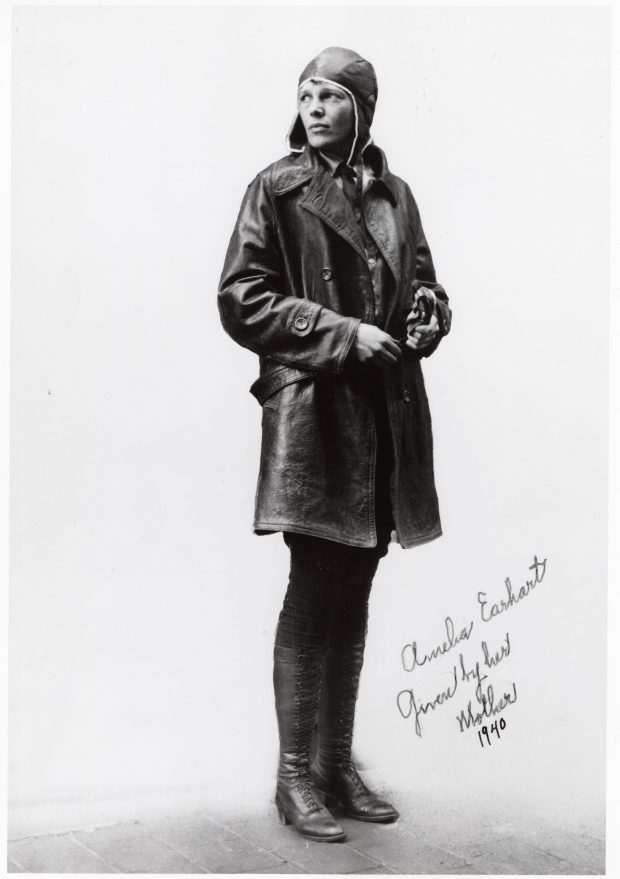
Amelia Earhart (1897-1937) is the most famous aviator of all time. And it’s not just because she disappeared. She was ferociously brave and determined, continually doing things that people said it was simply impossible for a woman to do. She was the first woman to fly across the Atlantic, initially as a passenger (1928) and then as a solo pilot (1932). She was the first woman to make a solo non-stop flight across the United States (1932). She was the first person, male or female, to fly solo from Hawaii to California (1935). And she met her death trying to become the first pilot to circumnavigate the globe at the equator.
From a costuming standpoint, the most important thing to wear is an aviator hat and goggles. As for the rest of the outfit, Amelia’s flying clothes evolved as fashions changed. Early in her career she tended to wear the trench coats, jodhpurs, and boots that were a holdover from World War I uniforms. Later in the Thirties she was more likely to wear bomber jackets and slacks. We’re going with the earlier look. Here she is in 1928:
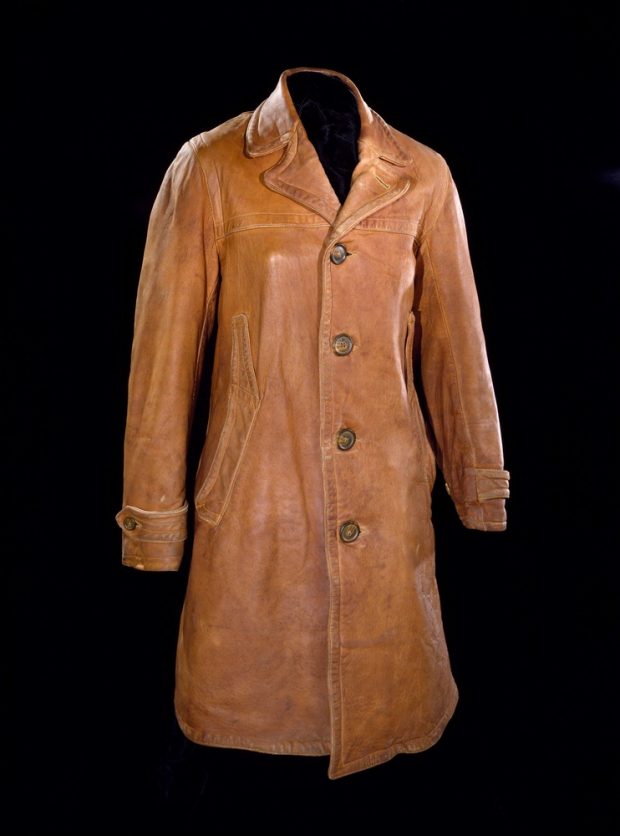
And here’s a picture of Amelia’s actual trench coat from the Smithsonian:
These are the items you need:
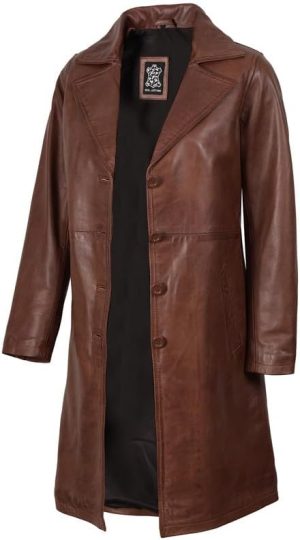
1. Leather trench coat. Or you could get a faux leather trench coat for a lot less money, or search for a vintage coat.
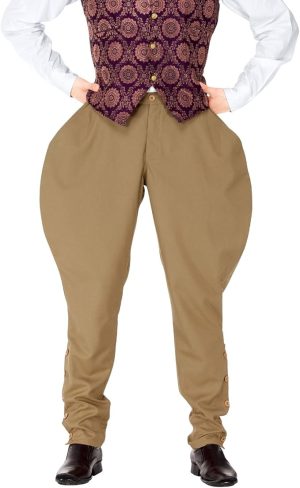
2. Jodhpur-style breeches. These khaki costume jodhpurs are a good choice to simulate the look of World War I breeches.
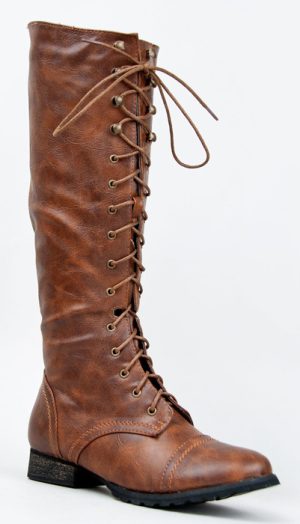
3. Military-style lace-up boots in brown. You can usually find knee boots on Amazon that have this kind of style.
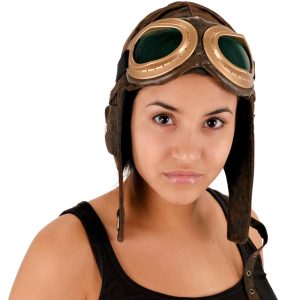
4. Costume aviator hat. Note that this is just the hat; you have to get the goggles separately (next).
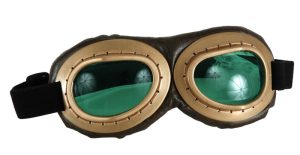
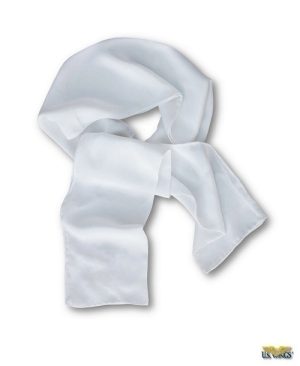
6. Aviator’s white silk scarf: If you don’t already have a white silk scarf you can use, this is the genuine article. That same store also carries real leather aviator hats and reproduction goggles—not costume shop stuff—if you’re looking for authentic gear.
Put all that together, and you’ll be the spitting image of Amelia as she appeared in the star-making photo that ran in the New York Times on June 10, 1928 (above and in our main illustration). If you want to carry the effect even further, wear a button-down shirt with a man’s tie. That seems to be what Amelia’s got going on in the picture. She also has on either a vest or a sweater, or maybe even a jacket underneath her coat. It was cold up in those little planes!

Josephine Baker (1906-1975) was the original superstar diva. She left behind the racism of the United States to become a sensation in France, where she was celebrated as one of the most glamorous women in the world. She was a fabulous entertainer, a devoted animal lover (she was famous for walking her pet cheetah on the streets of Paris, both of them wearing matching diamonds), an outspoken civil rights advocate, an adoptive mother of 12 (her “Rainbow Tribe”), and even a spy for the French Resistance (she smuggled messages on her music sheets). An altogether amazing woman.
If you want to channel La Baker, here are the pieces we suggest:
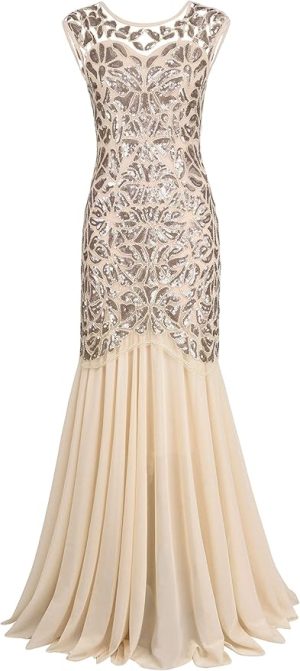
1. Gorgeous sequined 1920s-style gown in champagne. This fabulous dress looks very à la Baker to us. Incredibly glamorous.
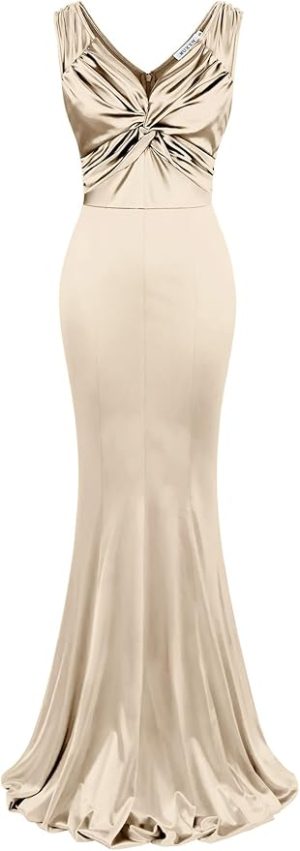
2. Alternative dress: Champagne satin mermaid gown. If you want more of a 1930s bias-cut look, this dress will do the trick.
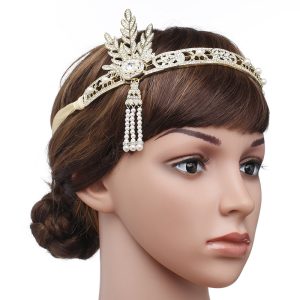
3. Fabulous flapper-style headband.
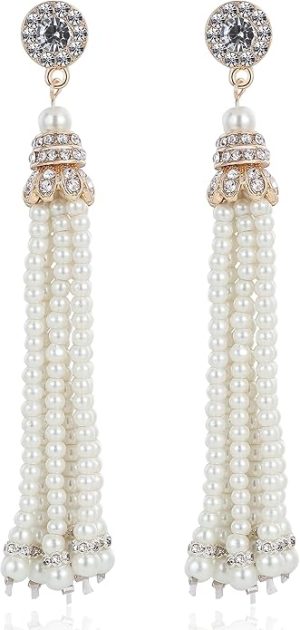
4. Gorgeous Art Deco earrings.
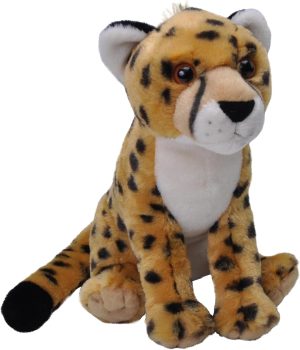
5. Stuffed cheetah. Josephine’s beloved pet cheetah was named Chiquita. Here’s your very own Chiquita cub to carry with you; we suggest a stretch rhinestone bracelet to slip around Chiquita’s neck as a glamorous diamond collar.
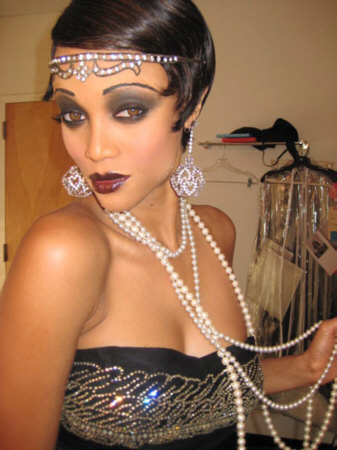
Makeup: The style in the 1920s and 30s was for very thin, long eyebrows. Here’s Tyra Banks as Josephine Baker:
How to do your hair like Josephine Baker: In an article from 2010 that sadly is no longer online, Essence suggested using Mizani Styling Gel to get the look of 1920s-era pin curls. If your hair isn’t the right length for that, you could get an inexpensive flapper-curl wig and use high-shine gel or pomade to slick it down and give it that glossy look.

Did you know that June Carter (1929-2003) considered herself a feminist? Somebody asked her that back in 1999, and she replied that yes indeed, she did think of herself that way. And she said she probably got it from her mother, the great Maybelle Carter, who was, in June’s phrase, “born liberated.”
June Carter was a pistol, and she met her match in Johnny Cash (1932-2003). Their remarkable love story still fascinates people, and so it is perhaps no surprise that they topped the poll when we asked our fans to vote for a couples costume. It probably helps that their story spans almost five decades, so couples of all ages and sartorial inclinations can find themselves in Johnny and June.
If you have a guitar (or can beg or borrow one), this whole deal is pretty easy to pull off. You can probably put most of it together from thrift store finds and closet dives, especially if you have relatives who lived through the fashion traumas of the 60s and 70s. We decided to go for a 1960s look. Here are the items we suggest (items 1, 2, and 3 for June, items 4, 5, and 6 for Johnny):
June Carter
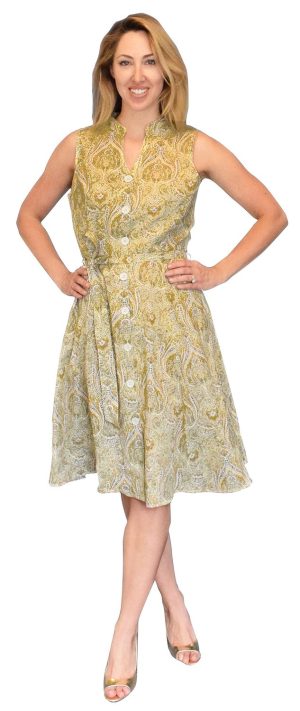
1. Peach Couture retro dress in paisley olive. This belted A-line dress has a very 60s vibe. We’ve seen kitchens that had vinyl flooring like that.
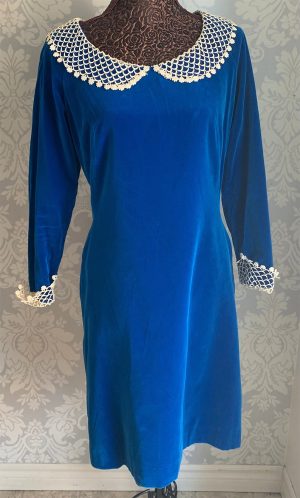
2. Alternate dress: Vintage 1960s Mod velvet dress. If you can find a vintage item like this, it would be a great match for June’s late 1960s style. You would wear white tights with this (or off-white to match the collar).
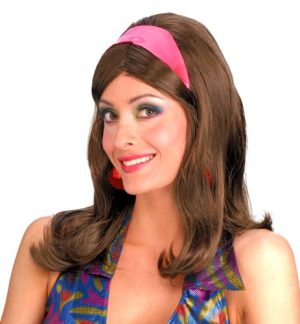
3. 60s style wig. You definitely need long brown hair to be June, and this wig will give you a 60s look. Unless of course you have already long hair that you can tease and flip into that style.
Props: If you have an autoharp or a guitar, that would be great. You can also carry a prop microphone for when you and Johnny bust into “Jackson.”
Johnny Cash
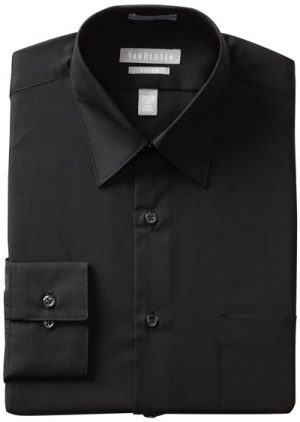
4. Basic black shirt. Johnny Cash was known as the Man in Black, so an easy costume choice is to pair a black dress shirt with black pants or jeans. If you have a black suit or jacket too, that would be awesome.
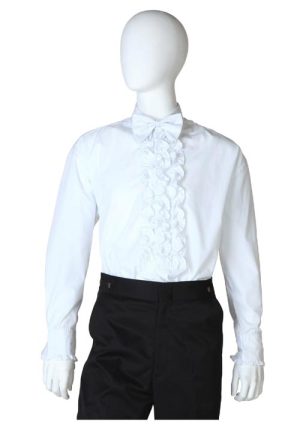
5. Alternate shirt: Ruffled-front tuxedo shirt. If you have a dark suit, you can go for Johnny’s late 60s look by pairing it with a retro style ruffled-front shirt. Notice how Johnny’s dressed in our main illustration above. Late 60s, all about the ruffles.
6. Barber’s Classic by Mitch. Pomade, dude. That’s what you need for your hair.
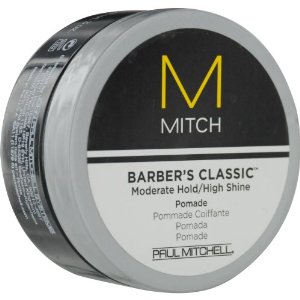
Check it out:
Props: Carry a guitar, obviously.

Rita Hayworth (1918-1987) was born Margarita Carmen Cansino, the daughter of a professional flamenco dancer from Spain. Trained as a dancer herself, she started out in Hollywood doing bit parts. The studio dyed her hair red, changed her name, and transformed shy young Rita Cansino into Rita Hayworth, flame-haired femme fatale of the 40s. Her signature role was Gilda, in which she did amazing things in a black satin strapless gown. Independent studies have concluded that Rita Hayworth is so mesmerizing in that film that nobody has any idea what the movie is actually about.
The pieces we suggest:
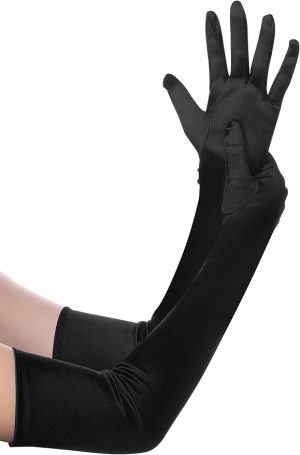
1. Strapless gown in black satin with a scarf. Tie the scarf around your waist and make a big bow at the front, and you’ll have a pretty good approximation of the Gilda dress. (The costume designer for the movie added the bow to disguise Rita Hayworth’s postpartum figure.)
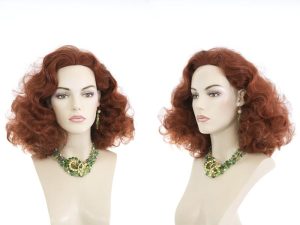
3. Rita Hayworth wig. If you don’t already have Rita Hayworth hair, this wig will fix you up.
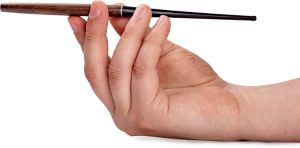
4. Cigarette holder. You don’t actually want a great big long one like Audrey Hepburn’s in Breakfast at Tiffany’s. Something like this is a better match.
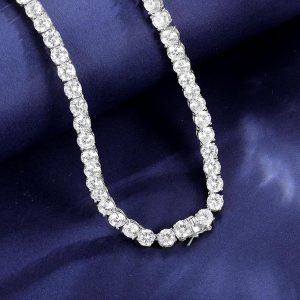
5. Rhinestone tennis necklace. In Gilda, Rita paired her strapless black satin gown with a simple diamond necklace, which you can see in the video below. Look for a “tennis necklace” like this with a chain of rhinestones.
The famous “Put the Blame on Mame” number from Gilda:

Jean Harlow (1911-1937) was the first Hollywood blonde bombshell. Everything about her style was designed to play up her platinum blonde looks: white satin gowns, white furs, white feathers, white diamonds. Even her movie sets were white (furniture, walls, carpet, telephone, everything). It must have been quite a vision for Depression-era audiences.
To channel Harlow, the key things are platinum blonde hair and a slinky white gown. Plus as many accessories as you can manage. The pieces we suggest:
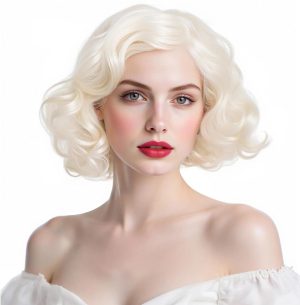
1. Platinum blond wig. If you don’t already have Jean Harlow hair, this wig will do you up.
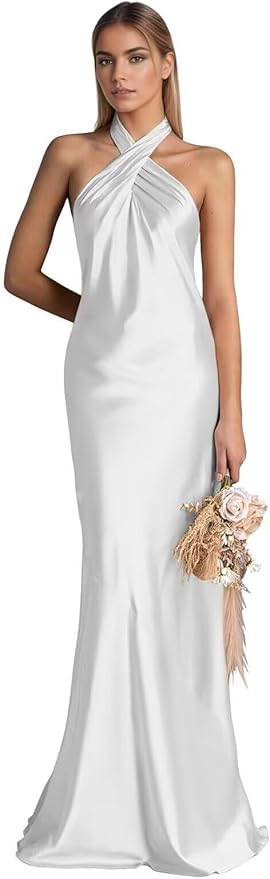
2. White satin gown with cross-halter neck. This super slinky dress is perfect for Harlow.
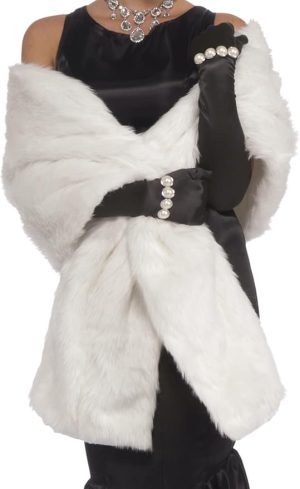
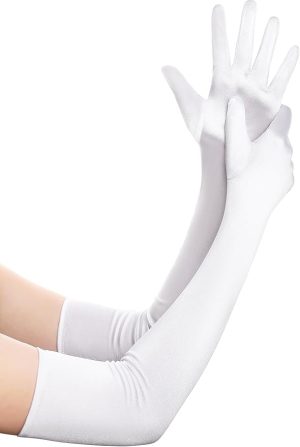
5. Rhinestone bracelets. Pile as many on over your gloves as you can.
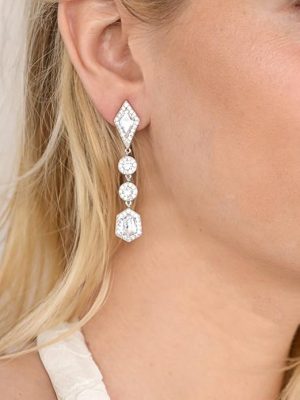
6. Fabulous Art Deco earrings.
Makeup: Jean Harlow had some weird eyebrows. Actually, she didn’t have eyebrows at all: her real ones had been removed, and in their place two impossible-looking arches were drawn on her forehead. Weird.
To get that look without shaving off your eyebrows, you’ll need to apply several layers of makeup to cover up your natural brows. This short video isn’t a tutorial, but it illustrates the process:

Before she married Prince Rainier of Monaco, Grace Kelly (1929-1982) was an Oscar-winning actress at the very top of the Hollywood game. On-screen she played cool beauties; off-screen she was fiercely independent and free-spirited. Later, as Princess of Monaco, she became rather conservative, but in her youth she was a firecracker. A firecracker in ice-blue satin.
In 1955 Grace won the Academy Award for Best Actress for her role in The Country Girl. At the ceremony she wore an unforgettable satin gown the color of sea ice. That’s the look we’re going for with this costume. The pieces we suggest:
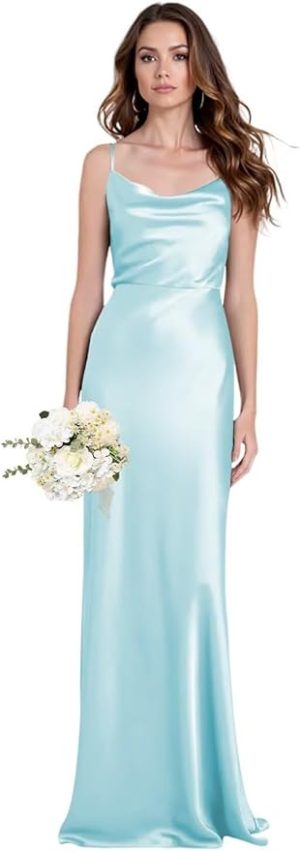
1. Cowl neck satin gown in light blue. The draping effect on the bodice is reminiscent of the gown Grace wore, as are the spaghetti straps.
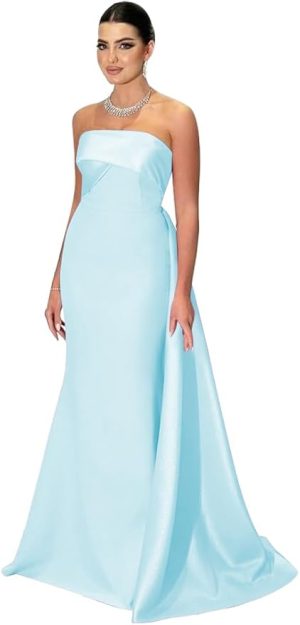
2. Alternate choice: Strapless satin gown in light blue. This gown echoes the bodice fold and train of Grace’s dress.
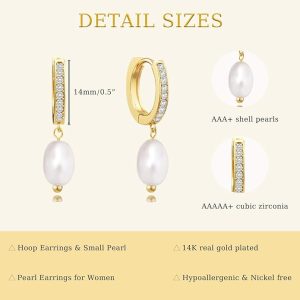
4. Pearl drop earrings. Gold-plated to match your Oscar.
5. Oscar statue to carry with you. Practice your acceptance speech!

6. Honey blonde wig. If you don’t have Grace Kelly hair, you can try this wig. The color is about right.