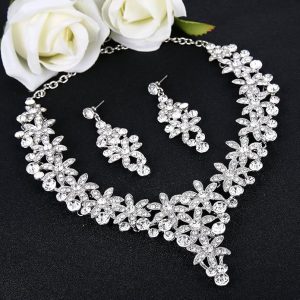
How great was Empress Theodora (500-548)? This great: she outlawed wife-killing, banned sex trafficking and sex slavery, expanded women’s property rights, gave mothers the right to raise their own children, and generally endowed women with higher legal status than they’d ever had in the entire history of the Roman Empire. Yay, Theodora! She wasn’t a reigning empress in her own right—it would be another three centuries before the Byzantines crossed that bridge—but she exerted enormous influence over her husband, Emperor Justinian. For all intents and purposes they were co-rulers: Theodora’s name is on all the laws, and functionaries swore allegiance to both Justinian and Theodora.
Byzantine clothing looks ferociously complicated at first, but it’s actually quite easy to mimic with modern pieces. Our main illustration above shows Theodora as she appears in the famous mosaic at the Church of San Vitale in Ravenna (that’s her in the middle holding the jeweled chalice). These are the chief elements of her outfit:
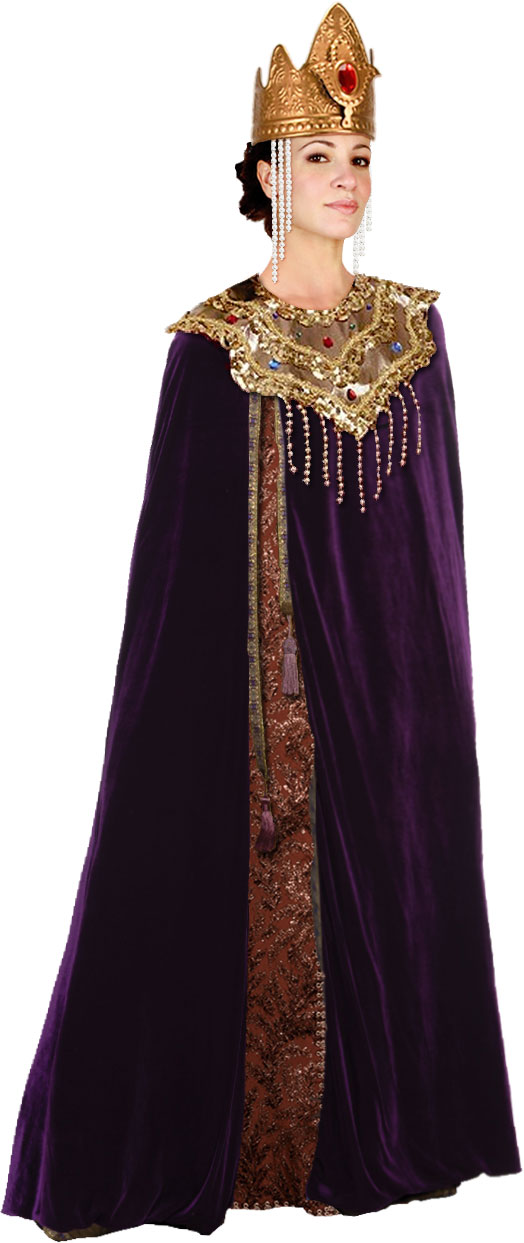
- A full length chlamys (cloak) in imperial purple, fastened on the shoulder;
- A wide collar called a maniakis, embroidered with gold and encrusted with jewels;
- An imperial crown with prependoulia, pearl-and-gem dangles that hang from the sides;
- A full-length dalmatica (or tunica), a long-sleeved T-shaped gown of silk brocade.
To fake it, here are the pieces we suggest, from left to right:
1. Purple reversible cape. This fabulous cape is perfect for an imperial chlamys; just wear it to the side, with the opening at your shoulder.
2. Queen of the Nile collar. This costume piece is supposed to be Egyptian, but it doesn’t really look it at all. It does, however, bear a striking resemblance to an imperial maniakis, especially with those dangly things.
3. Gold crown with pearl beads. This new “queen crown” from Elope has a vaguely Byzantinish feel to it; it works very well for Theodora. To add the prependoulia, just snip some strands of fused plastic pearl beads and Scotch-tape them to the inside of the crown. (Mardi Gras beads or plastic pearl necklaces would work too.)
4. Moroccan caftan with embroidery. A fancy Moroccan caftan is probably the closest thing in existence to an imperial Byzantine dalmatica. Theodora would have worn a white silk dalmatica for special occasions—in the Ravenna mosaic her gown is white with an enormous border of gold embroidery at the bottom—but we thought this rich bronze caftan looked better with the outfit.


Related post: Last-minute Demeter (sheets, some leaves, and grocery store produce)
Demeter is the Greek goddess of agriculture and the bountiful earth. It is she who makes the crops grow—except for those months when her daughter Persephone is in the Underworld, for then Demeter weeps and leaves the earth bare. Together Demeter and Persephone represent the cycle of life and death, and their saga was the basis of the Eleusinian mysteries. Frequently the two goddesses are shown enthroned together, as in our illustration above. Demeter herself is invariably depicted with sheaves of wheat, and sometimes she holds a cornucopia overflowing with the fruits of the harvest. Her colors are earthy greens and golds, though like Persephone she is also symbolized by the vivid poppy flower.
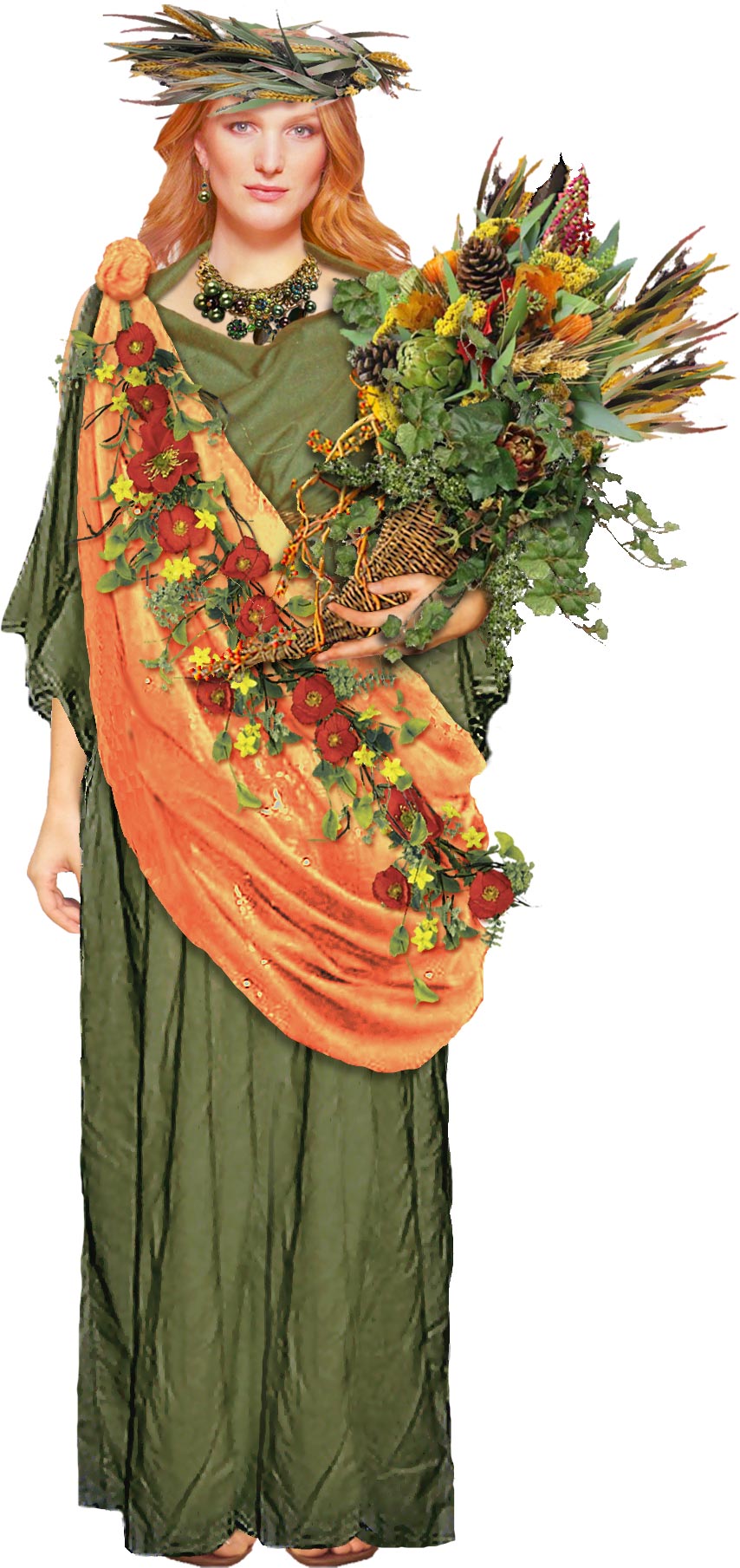 The pieces we suggest, from left to right:
1. Green flat sheet. This is for your tunic. The Greeks wore simple draped tunics of dyed wool, a look which is easily replicated with sheets and safety pins. We give you instructions below on how to pin it together.
2. Orange silk veil. Loop this under one arm and knot it on your opposite shoulder.
3. Poppy garland. Layer this on top of the orangey-gold veil. You could also use a grape garland, or get some individual silk poppies and twine them together to make a garland.
4. Chunky green necklace. The one we found is wonderful for an earth goddess: it has green globes, flowers, and little clusters that look like berries.
5. Wheat wreath. Wheat wreaths like this are usually available in the stores in fall. If you get one with a metal base you’ll probably want something to cushion it on your head.
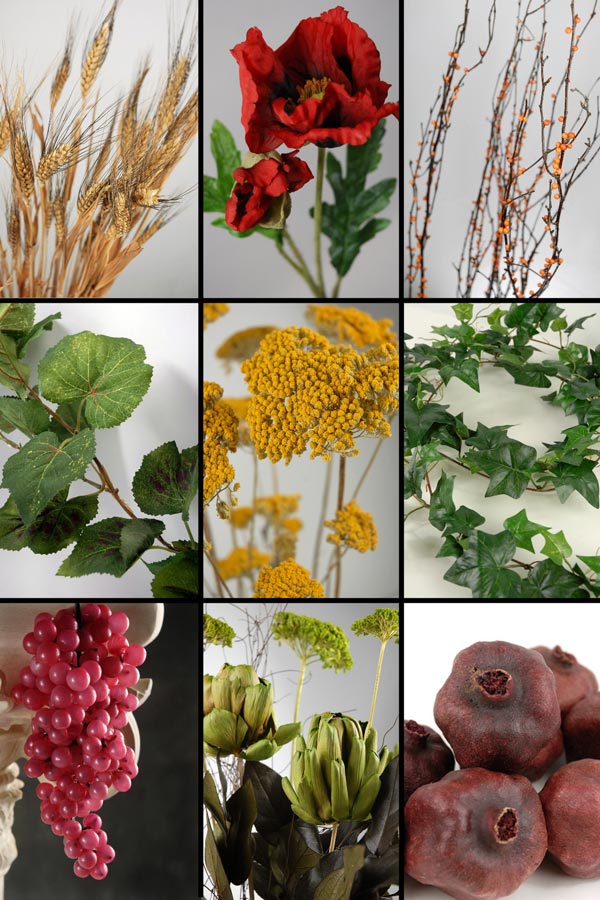
6. Cornucopia. Probably the easiest thing is to make a trip to a craft store that has a silk flower section and floral supplies. You can usually find cornucopia baskets in the fall; if you need to order online you can get them here. You’ll want to fill your basket with wheat sheaves, fruits and berries, flowers, vining greenery—whatever looks good. We shopped online at Save-on-Crafts for a selection of items that would be appropriate for Demeter’s basket. In the composite image below:
Top row, left to right: Wheat stalks. Red poppies. Birch branches with orange berries.
Middle row, left to right: Grape leaf garland. Yarrow. Ivy garland.
Bottom row, left to right: Grapes. Artichokes. Pomegranates.
Shoes: Simple leather sandals are best. Gladiators, thongs, something like that.
How to make the tunic: The simplest ancient tunic for costuming purposes is the Doric chiton, which consists of a single rectangle of fabric folded around the body. All you need is a flat sheet, some safety pins, and a belt or cord. Here are your chiton instructions:
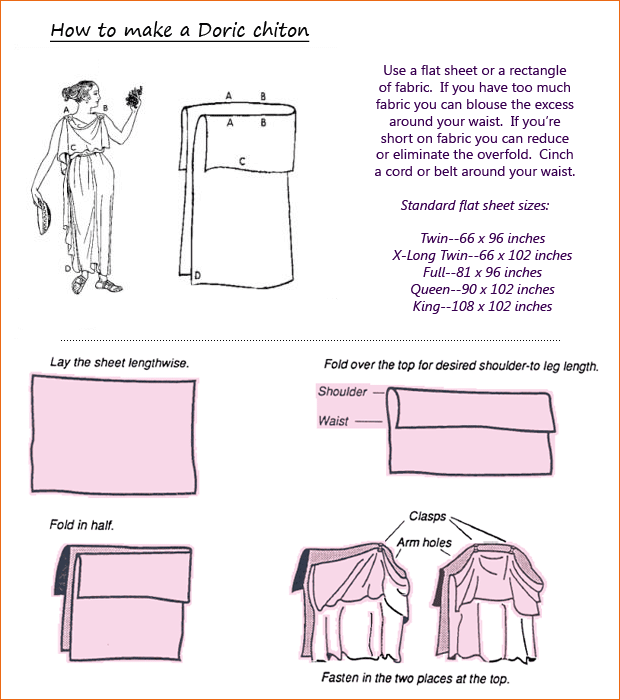
Illustration credits: The painting in our main illustration is Demeter and Persephone Throwing Seeds upon the Earth by Theodore Manolides. The large statue of Demeter holding a cornucopia is from the Museo Pio-Clementino, Musei Vaticani, Vatican City. The round image is a modern copy of an 18th century relief in the Versailles Municipal Library, France.

Lady Six Monkey (1073-1101) was a Mixtec warrior queen whose story is known from the Mixtec Group Codices. She and her arch nemesis, Lord Eight Deer, loomed large in the legends of Oaxaca for many centuries. (People were named after their birthdates, by the way.) Mixtec society was remarkably gender-equal, and both males and females could inherit the throne. The Spanish were astounded by the high status of Mixtec women; they reported that a Mixtec man would typically defer to his wife as the brains of the family and official spokesperson.
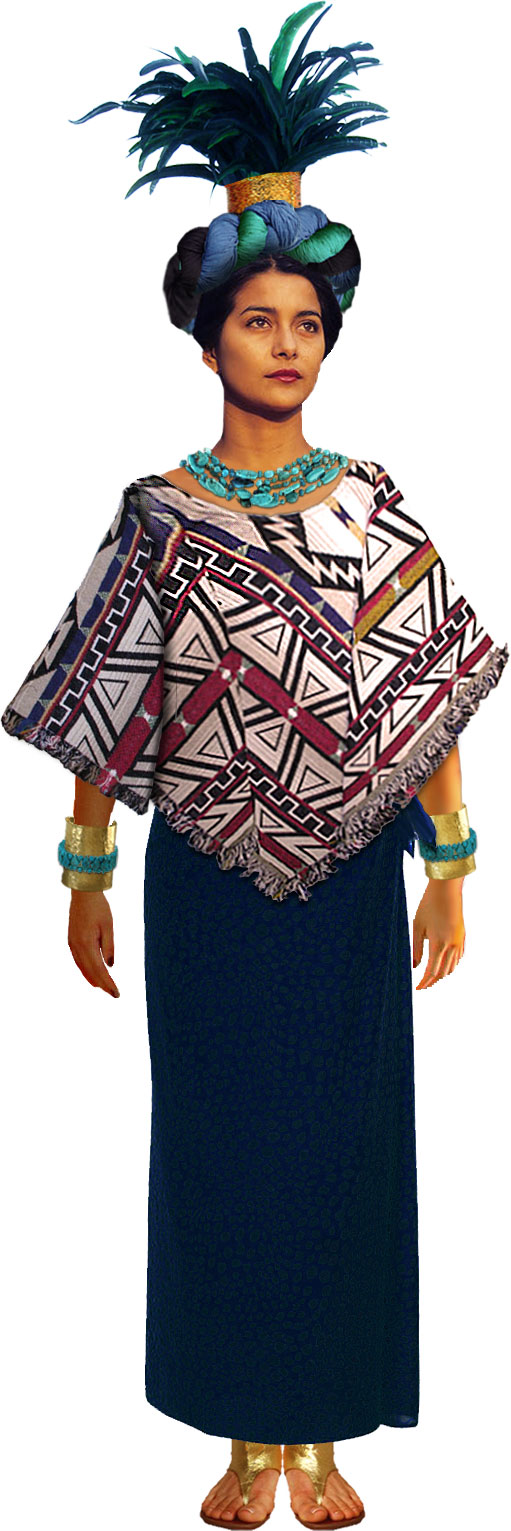 Our costume is inspired by the awesome Angus McBride illustration above, which in turn is based on the images in the codices (inset). McBride shows Six Monkey in the traditional dress of a Mixtec noblewoman: a blue wrap skirt and a quechquemitl (a fringed cotton poncho-like garment). The trickiest bit is the headdress, which consists of two major components: a yarn turban similar to the turbans still worn in Oaxaca, plus a crown of quetzal feathers mounted in gold. This is actually much easier to rig up than it sounds; we give you instructions below.
The pieces we suggest, from left to right:
1. Chevron-patterned poncho. Chevrons indicate war in Mixtec iconography, which is why McBride put the warrior queen Six Monkey in a chevron-patterned quechquemitl. We chose this chevron-patterned poncho as a good substitute. If you have a genuine quechquemitl, then by all means use that; otherwise a poncho will work fine—just as long as it has the point in the front. If you want to try sewing your own quechquemitl, Mexicolore has a good page with instructions.
2. Navy blue sarong as a wrap skirt. Women in Oaxaca are still weaving blue wraparound skirts; this sarong is an inexpensive substitute. We chose the navy blue to match the blue in the poncho.
3. Multi-strand turquoise necklace. The Mixtecs were famous for their wonderful turquoise and gold jewelry. If you happen to have any giant ear spools, that would be good too.
4. A pair of gold cuff bracelets combined with two stretch turquoise bracelets. Just stretch the turquoise band around the gold cuff.
5. Gold gladiator sandals. Women in the Mixtec codices are actually shown barefoot, but we’re thinking you might need shoes. Mixtec men appear to be wearing a thong-style gladiator-type sandal situation, so we went with that.
6. Headdress. It looks complicated, but it’s really easy. There are two parts: the yarn turban, which is really just a doughnut of yarn twisted together, and the gold feather crown in the middle.
First you need to make the yarn turban/doughnut. Here are two pictures of a modern Oaxaca version (a petob)—what it looks like being worn and what it looks like off the head:

Getting this effect is as simple as buying some skeins of different colored yarn and twisting them together. And you can be creative, since there’s no reason to suppose that Lady Six Monkey, who lived a thousand years ago, was wearing exactly the same kind of headdress as a modern woman. For the costume, we chose Berroco “Weekend” yarn in Starry Night, Pitch Black, and Parrot Green. When you get the skeins, just remove the labels and let them relax into a ring. Then twist them together into a yarn doughnut. Use short pieces of the black yarn to tie the rings together at key points.
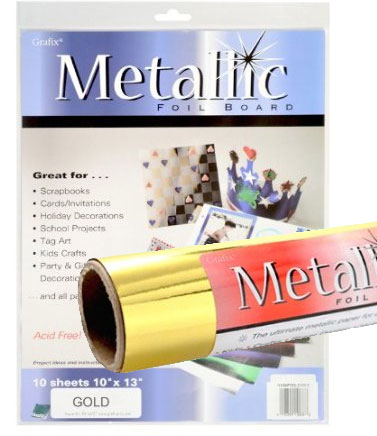 To make the inner crown, all you need is a gold foil cylinder, some greenish feathers, and Scotch tape. Get a piece of gold metallic foil board, cut a strip 6 inches high, roll it up into a cylinder about 5 inches in diameter, and tape it together. Once you have your gold cylinder, tape the feathers inside. We chose peacock sword feathers; these are side feathers that don’t have eyes, so they can serve to represent quetzal feathers (there were no peacocks in pre-Columbian Mexico). Arrange them around the inside of the gold cylinder, taping the quill of each feather to the inner cardboard. You’ll end up with a cool-looking feather crown.
Then take your yarn doughnut and center it around the outside of the feather crown. A boatload of bobby pins may be in order to keep the whole thing on your head.

Empress Carlota (1840-1927) is one of the most intriguing and tragic figures in Mexican history. Born Charlotte of Belgium, she married Archduke Maximilian of Austria when she was only seventeen years old. In 1863 the young couple were invited to become Emperor and Empress of Mexico. Unfortunately, the person doing the inviting was Napoleon III of France, and nobody consulted the Mexican people. It all ended very badly, with Maximilian dead via firing squad and Carlota hopelessly insane. She spent the rest of her long life locked away in various castles in Europe.
But Carlota’s story isn’t all misery. In her salad days she was a sharp thinker, a renowned beauty, and the owner of some very famous jewels. (They’re still famous: one of her diamonds sold at auction in 2010 for 1.7 million dollars.) Our costume is inspired by the beautiful portraits made during those peak years, showing Carlota as the newly crowned Empress of Mexico. The pieces we suggest, from left to right:
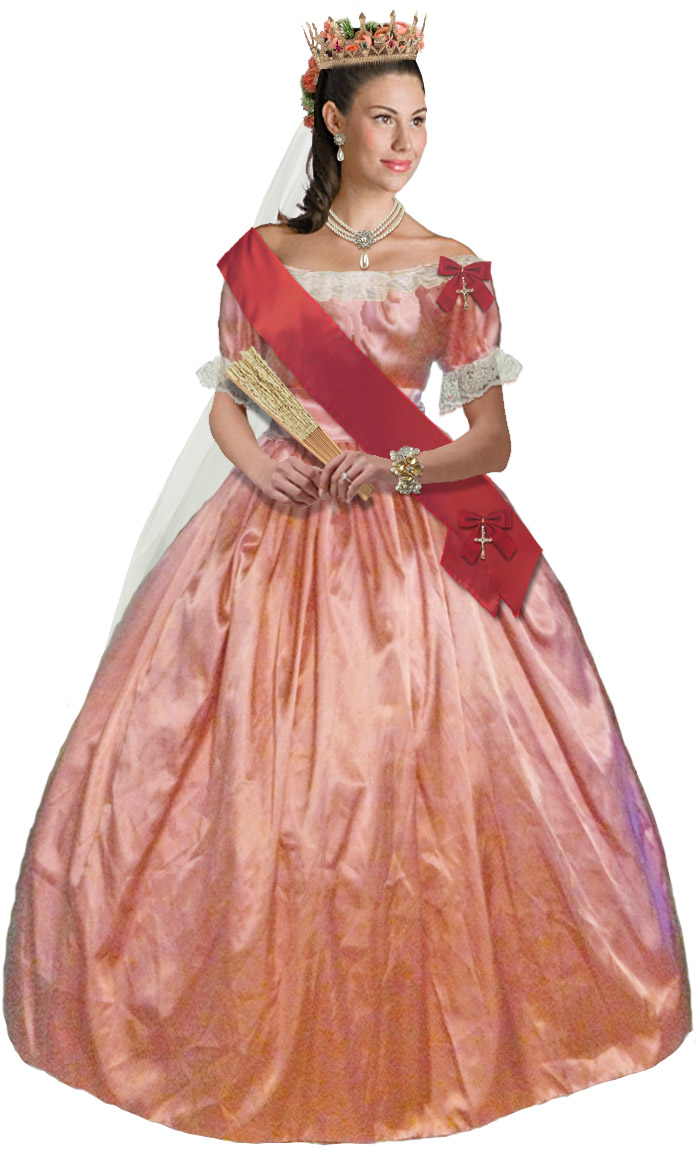 1. Peach satin ballgown with ivory lace trim. The seller’s main picture of this gown is red, but the inset color card shows the options available. You’ll need to specify the color of the satin and the lace when you order.
2. Five-bone hoop skirt. You absolutely must have a hoop skirt petticoat to make the dress pouf out. This one has a maximum bottom circumference of 149 inches, which means it will fit nicely under the dress in #1. (It can also be adjusted down.) You can also get a hoop skirt from the seller of the dress in #1 if she has it in stock. We also suggest a corset; it’s not required, but it will give you the correct period silhouette.
3. The Imperial Order of Saint Charles. The red sash and ribbons Carlota is wearing in her portraits represent the Mexican Orden Imperial de San Carlos, of which she was the sovereign. Get a plain red sash from a party store; wear it over your right shoulder. To make the badges, get two cross pendants or charms (these from Firemountain are 2.3 inches long) and a couple of red velvet bows(the kind that are available everywhere during Christmas). Tie each cross pendant onto a bow so it dangles from the center. Pin one of these on your left shoulder and the other one on your sash where it crosses over your hip.
4. Tall gold crown plus veil and flowers. This is a better-quality crown, made of metal and rhinestones rather than plastic. To imitate Carlota’s look, you’ll also need to get some ivory tulle and silk flowers (if you get the little pinky-peach rose bouquets we suggest, just cut the stems and re-arrange the flowers as necessary). Use the tulle to make a wispy veil; pin it to your hair and secure with the crown. Arrange the silk flowers into a little wreath inside your crown, and pin a few to your veil trailing down the back as well.
5. Necklace, Earrings, and Bracelet Set (goldtone and cream). Carlota’s jewels are so famous they have names: the Carlota Diamond, Carlota’s Pearl (a huge pear-shaped drop). A costume jewelry set like this, with big faux pearls and diamonds, will give you the right look.
6. Ivory lace fan. From the Ladies’ Emporium, which has all kinds of fun Victorian things.
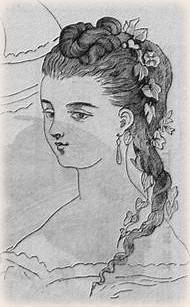 Hairstyle: In her imperial portraits Carlota wears the classic mid-Victorian upsweep, with the hair coiled into a ringlet that curls over the shoulder. The crown and veil will cover a lot of your hair, so mostly you just need to pull it up. If your hair isn’t long enough to make that ringlet, you might try clipping in a ponytail extension.
Shoes: Evening shoes in the mid-1860s were usually low-heeled pumps. If you have some satin bridal shoes, that would be perfect.

Queen Liliuokalani (1838-1917) was the last reigning monarch of the Kingdom of Hawaii. She came to the throne in 1891 as a pro-native, pro-woman advocate for her people, and quickly found herself at odds with the American businessmen (sugar barons, pineapple planters) who wanted to annex the islands to the United States. Liliuokalani had the support of the native Hawaiians, but the Americans had the support of an armed U.S. warship in the harbor and a landing force of U.S. troops. In 1893 they overthrew the monarchy, deposed the queen, and established a Provisional Government with Sanford Dole (of the pineapple family) as president. By 1898 the annexation of Hawaii to the United States was complete.
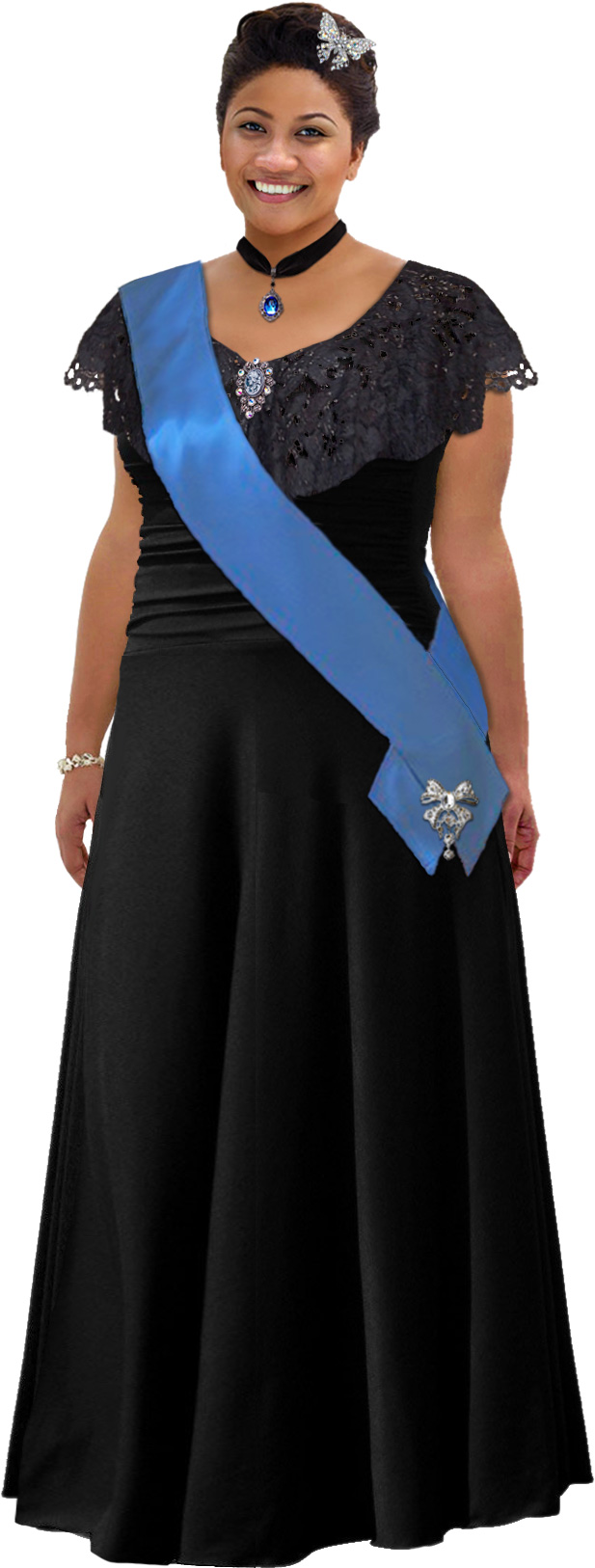 Queen Liliuokalani conducted herself with great dignity throughout the whole sorry episode, which included a show trial and temporary imprisonment. She made a number of attempts to resolve the situation via diplomatic overtures to Washington, but the tide of imperialism was against her. In retirement she devoted herself to writing, scholarship, charity, and above all, music. Liliuokalani was a gifted musician and composed over 150 pieces, including the most famous Hawaiian song in the world: “Aloha Oe.”
The items we suggest, from left to right:
1. Black Evanese gown in plus sizes. This is a thoroughly modern gown, but the way it’s cut makes it easy to fake a late-Victorian silhouette. Just temporarily add some lace at the neckline (next).
2. Black lace scarf. Instant Victorian styling. Tuck in this scarf all around your neckline/shoulder straps and shirr it to give the effect of a lace ruffle. A few black safety pins, discreetly positioned, will keep it nicely in place.
3. The Royal Order of Kalakaua I. That’s the blue sash and badge that the Queen is wearing in her portraits. Get a sash ribbon or a pageant sash and a bow-shaped rhinestone brooch. Wear the sash over your right shoulder and pin the brooch where it crosses at your hip.
4. Rhinestone butterfly brooch. One of Queen Liliuokalani’s prized possessions was the diamond butterfly brooch she bought in London during Queen Victoria’s Golden Jubilee. She wore it in her hair, which is exactly what you should do with this rhinestone brooch.
5. Gray cameo with rhinestone accents. Pin this over the lace at your neckline.
6. Imperial black velvet choker with blue rhinestone pendant. From the Art of Adornment, which carries all kinds of remarkable things.
Hawaiian heirloom bracelets: Queen Liliuokalani introduced the bracelet style that would come to be known as Hawaiian heirloom. It was initially inspired by the English mourning jewelry that was popular in the wake of Prince Albert’s death: black enamel lettering on a simple gold band. Liliuokalani fell in love with the style, and commissioned pieces as personal mementos and gifts. More than a hundred years later, the style is still a treasured tradition in Hawaii.
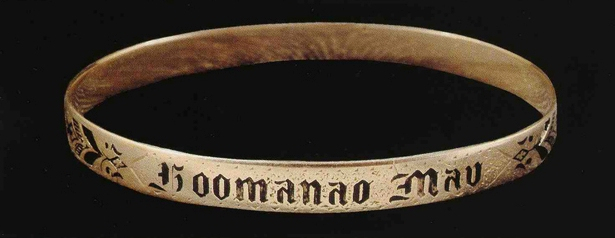
Queen Liliuokalani’s bracelet with the words “Hoomanao mau” (“Lasting remembrance,” or ho’omana’o mau). In the collection of Iolani Palace.
If you’re fortunate enough to have a Hawaiian heirloom bracelet, by all means wear it with your Queen Liliuokalani outfit. If not, you might want to fake it with an inexpensive metal bangle.
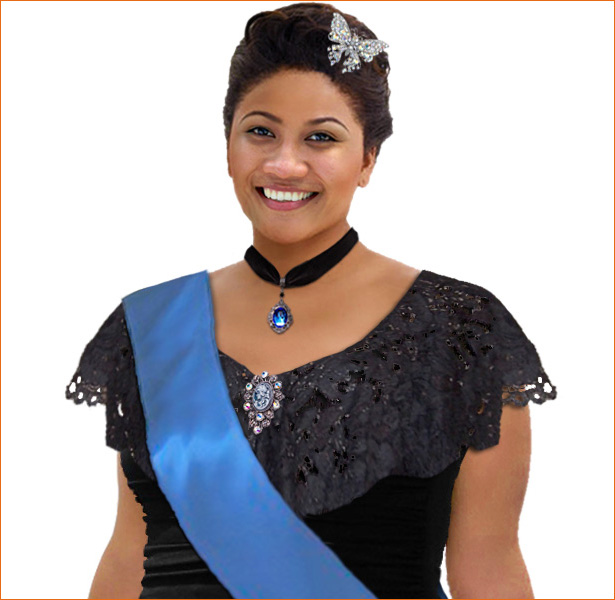
Main illustration credits: The full-length portrait of Queen Liliuokalani is by William Cogswell. We don’t know the provenance of the three-quarter portrait, but it seems to be based on a photograph made in 1887 (Wikimedia Commons). The detail images are of Liliulokalani’s diamond butterfly brooch and of the Royal Order of Kalakaua I sash and badge, both in the Iolanai Palace collection.

Pele is the living, breathing volcano goddess of Hawaii. Her home is Kilauea, which is also her body. The name “Pele” means molten lava; the mountain’s flanks are her flanks, the drops of airborne lava are her tears, and the shreds of volcanic glass that form are the strands of her hair. The red-blossomed ohia, which is one of the first plants to take root in a new lava field, is sacred to Pele; according to legend it represents a handsome young man who made the mistake of rejecting the goddess’s advances, and subsequently found himself turned into a tree. (Moral of the story: don’t mess with Pele.)
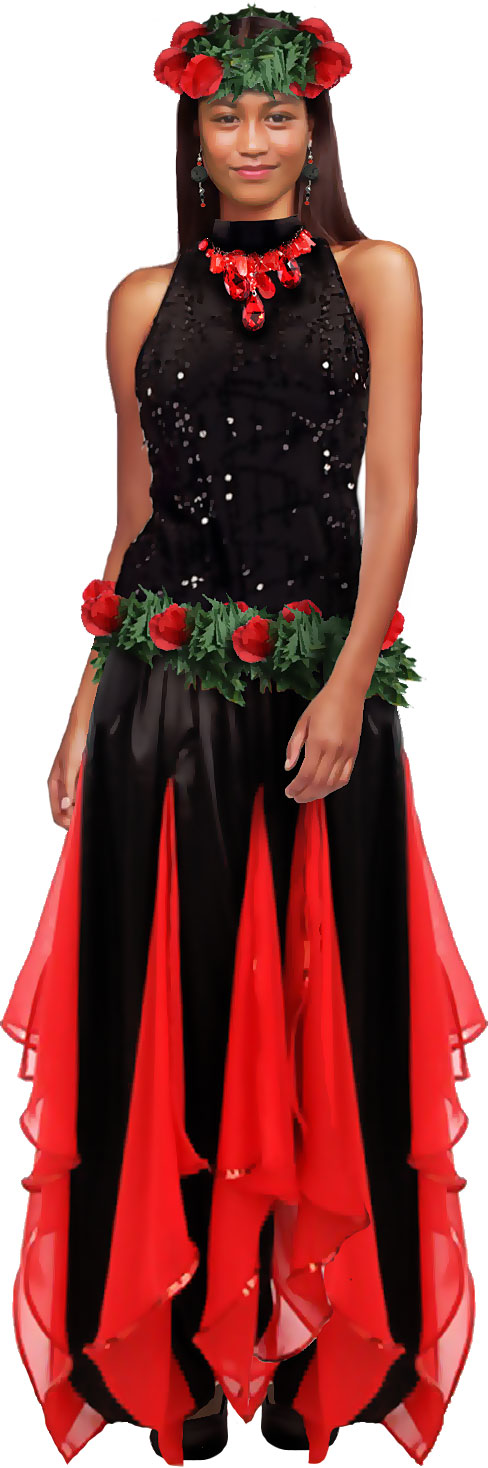 Dressing up as Pele basically means dressing up as a volcano. But Pele is also supposed to be a beautiful woman, so, you know, a pretty volcano. The pieces we suggest, from left to right:
1. Black harem pants with red chiffon panels. We think these pants look for all the world like the cinder cone of a volcano with molten lava pouring down the sides. Don’t they? As soon as we saw them we thought, “Volcano pants!”
2. Black sleeveless turtleneck with sequins. We’re keeping the general cone shape going here; this top is the upper part of the volcano. The sequins remind us of volcanic glass. You can go cheaper and just get a plain, sequin-free black sleeveless turtleneck.
3. Lei to use as a belt. These aren’t ohia flowers, but it’s still a nice lei, with lots of ferny foliage. You’ll probably need to get two to make sure you have enough length to wrap around your hips. Position the belt at the bottom of the turtleneck, to cover up the transition between top and pants.
4. Crown lei. For your hair, of course. You could also just get one of those other leis and cut off as much as you need to wrap around your head.
5. Chunky red crystal necklace. We love this necklace; it’s so shiny and vivid. You can wear the earrings that come with it, or get the ones we suggest (next).
6. Lava rock earrings. Lava jewelry can be surprisingly expensive, but it seems only right to include some real lava in our costume. These earrings are nice and long.
Shoes: We suggest black satin ballet slippers or other similar black shoes. You might also wear dark stockings or tights to keep that whole bottom-of-the-mountain effect going.

If it weren’t for Admiral Grace Hopper (1906-1992), you wouldn’t be reading this. There wouldn’t be an Internet to read it on. There wouldn’t be personal computers or word processors or any of the other digital wonders that we now take for granted. That’s because before Grace Hopper—“Amazing Grace,” mathematician and computer pioneer extraordinaire—computers were just big calculating machines doing arithmetic. Programming consisted of working directly on the machine, feeding it numeric commands. Hopper’s genius invention was the compiler: an intermediate step that would translate human instructions into machine-readable code. With the compiler, programmers no longer had to “speak” in ones and zeroes; they could work in a more natural language and develop incredibly complex programs, and then have the compiler turn it into binary code for the machine. Perhaps more than any other single invention, the compiler was what truly unleashed the power of electronic computing.
As if that weren’t enough, Grace Hopper also wrote the first programming language in English (which became the basis for COBOL), pioneered fundamental programming practices that are still at the heart of computing, and even popularized the terms computer bug and debugging. She was such a towering figure that the Data Processing Management Association chose her for their first Computer Sciences Man of the Year Award in 1969. (Insert all the ironic exclamation points in the world.)
She spent the last two decades of her career on active duty with the Navy, which is how everybody remembers her: the tiny elderly Admiral, still sharp as a needle, evangelizing about the power of computers. This makes the costuming simple, since a Navy uniform is pretty distinctive. It’s also easy to pull off if you go for the Summer White uniform, which is just a short-sleeve shirt and pants combo. You can buy a real U.S. Navy Female Officer Summer White Uniform from uniforms-4you.com:
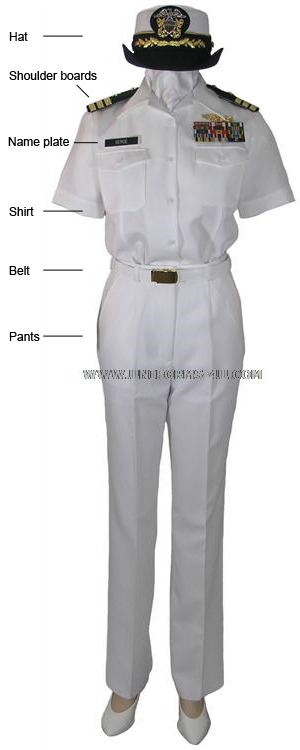
You could also fake it by putting together some items that more or less resemble the uniform components:
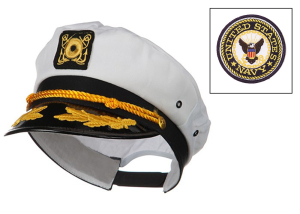
1. Hat: Yacht captain hat. Cover up the yacht emblem with an iron-on Navy patch and you’re good to go.
2. Shoulder boards: Admiral Hopper retired with the rank of Rear Admiral (Lower Half). She had initially retired from the Naval Reserve with the rank of Commander in 1966, but then was recalled to active duty for the next 20 years. She was promoted to Captain and then Commodore, and became a Rear Admiral in 1985 when the Navy renamed the rank of Commodore to Rear Admiral (Lower Half). So you need hard shoulder boards for a US Navy Rear Admiral (Lower Half).
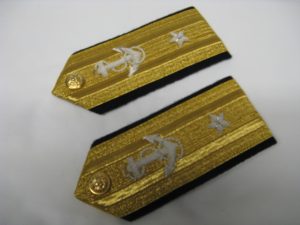
You can sometimes find these at a surplus store, or you can try making your own. Here’s another website that carries them and their photos are really big, so you can see what they look like in real life: Navy Hard Shoulder Board – Line Officers. For homemade shoulder boards, try shirt cardboard cut to shape, black felt, and gold trim and appliques from a fabric store.
3. Name plate: Custom Navy name plate. This is the genuine article, but it’s very inexpensive.

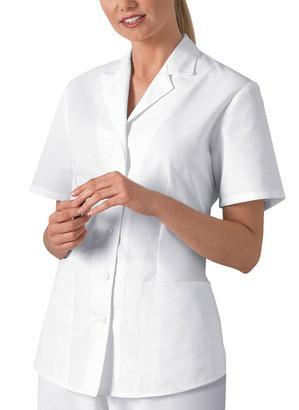
4. Shirt: Cherokee 2878 Women’s Professional Whites Lapel Collar Top. Scrubs are way cheaper than Navy uniforms, and if you pick the right style they can work for a costume. Tuck this blouse in and it will look fine.
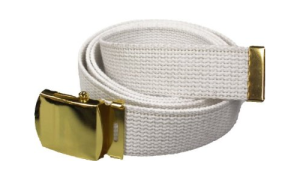
5. Belt: Military 54″ Web Belt (White w/Gold Buckle).
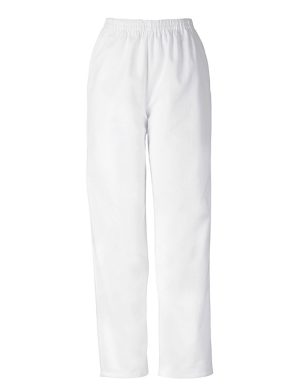
6. Pants: Cherokee 4001 Women’s Pull-On Scrub Pants. It’s not easy to find basic white pants that sit at the natural waist, the tyranny of fashion being what it is. These scrubs fit the bill reasonably well, and the belt will cover up the elastic waistband. You can use a couple of very large safety pins as discreet belt loops; just pin them on the inside of the waistband so that the straight metal part is on the outside. You’ll have two rigid steel belt loops that no one will even notice.
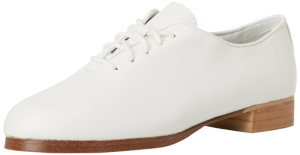
Shoes: If you already have white shoes, fantastic. If you don’t, white Oxfords like this are what you need:
Nanoseconds: At her lectures Admiral Hopper would pass out wires cut to exactly 11.8 inches in length. This, she would explain, was the distance light could travel in one nanosecond, which is one-billionth of a second. The wires she handed out were actually the single wires from inside old salvaged 25-pair telephone cable. You can do the same thing by ripping up some old junky cable you have lying around the house and cutting off individual pieces.
Illustration credits: The photographs of Admiral Hopper from the 1940s through the 1980s are file images from the Navy and the Library of Congress. The painting in the lower right-hand corner is by Tom Freeman and was created for the commissioning of the USS Hopper in 1997. The full painting was originally available on the Seaforces information page for the ship: DDG 70—USS Hopper.

Murasaki Shikibu (ca. 973-1014) was one of the world’s great literary geniuses. She wrote the first novel in history—The Tale of Genji—and with it created not only a timeless masterpiece of Japanese literature, but an entirely new art form. The photos above show performers garbed as Murasaki: the style is elaborate Heian period court dress, with multiple kimono-like robes layered on top of each other. Is there any possible way to approximate this without sewing? We’re going to try!
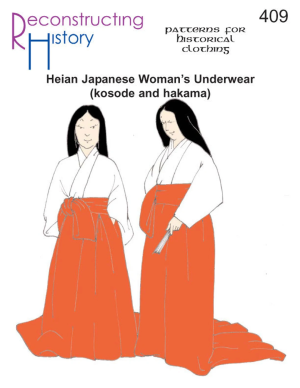
Reconstructing History offers two excellent patterns that illustrate the components involved. Reconstructing History Pattern 409 shows the white kosode (top) and red hakama (bottom trousers) that are the base layer:
Reconstructing History Pattern 410 shows the long underrobe (hitoe), layered robes (uchigi), and overrobe (uwagi) that are worn for an informal or semi-formal look:
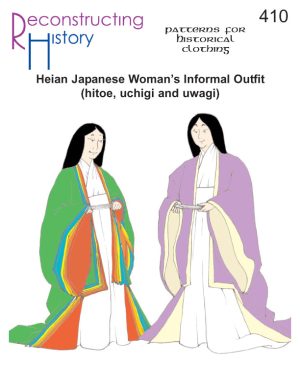
(There is also a third pattern, Reconstructing History Pattern 411, for the topmost jacket and ceremonial train that would elevate the ensemble to high formality, but we don’t need that.)
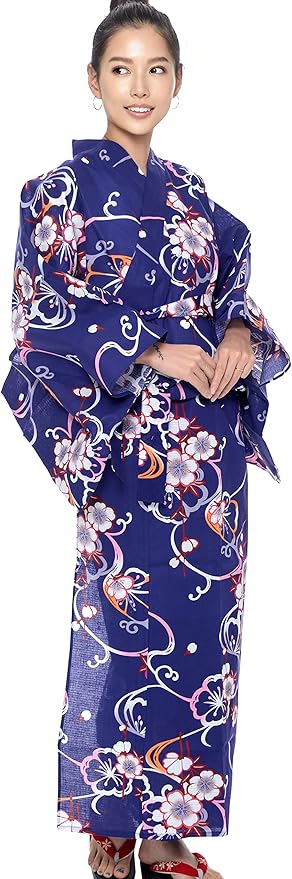
Our approach is to fake this out by layering a couple of yukatas in complementary patterns on top of a miko costume:
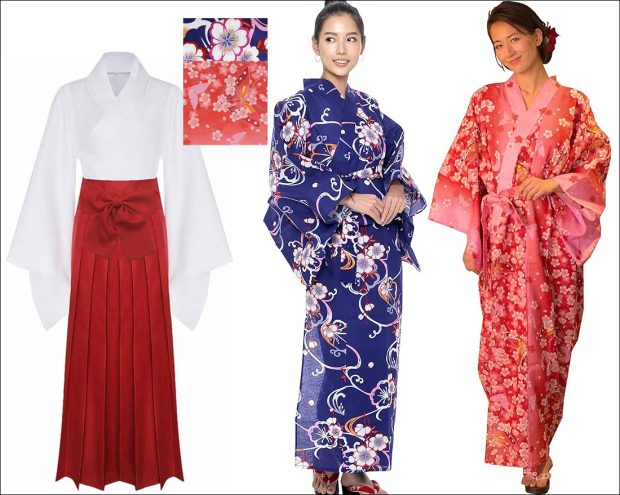
The pieces we suggest:
1. Miko costume. The miko (Shinto priestess) costume is very similar to the hakama and kosode that Heian ladies wore as their base layer. You can try a cosplay costume like this:
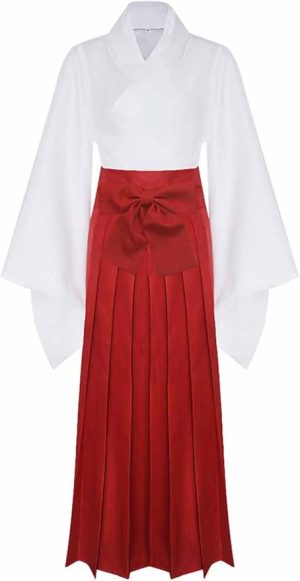
You can also look for a red hakama and white haori (jacket) at martial arts stores (look for kendo uniforms).
2. Contrasting yukata for the next layer.
3. Complementary yukata for the top layer.
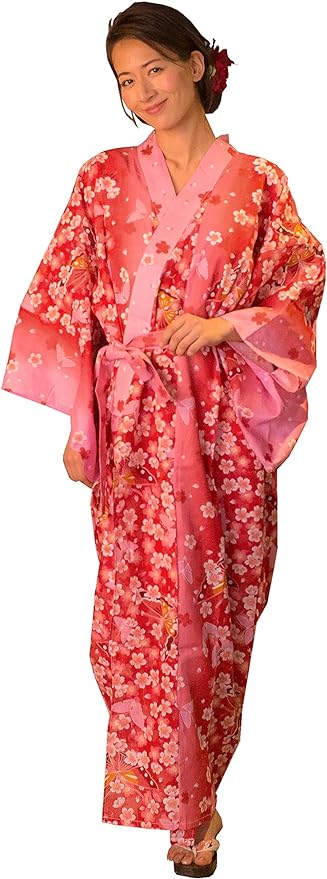
You’ll want to adjust all your layers carefully and probably secure them with safety pins so that each color shows.
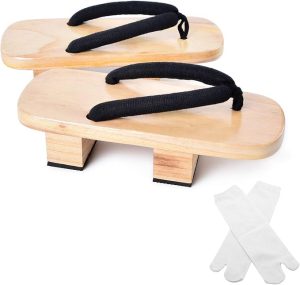
4. Geta (wooden sandals) and tabi (split toe socks).
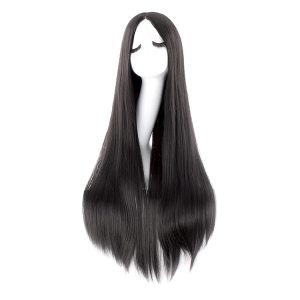
5. Long black wig (40 inches). Unless you already have super-long black hair.
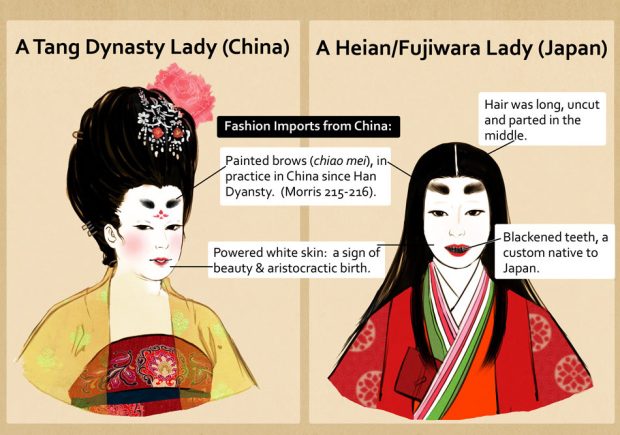
Makeup: Heian ladies wore white face makeup, painted false eyebrows high up on their foreheads, and dyed their teeth black. Pretty intense. Here’s a wonderful illustration by Nancy Duong showing how Heian beauty standards were a combination of Chinese influence and native aesthetics:
Sometimes there are video tutorials on YouTube or TikTok, so have a look.

Calamity Jane (1852-1903) was born Martha Canary, and after that things get fuzzy. Almost every detail of her life is disputed, mostly because she told quite a few tall tales (as did all the other Wild West figures who were interviewed back then for newspapers and dime novels). What’s certain is that she dressed as a man—at least some of the time—and raised a lot of hell.
If you’re interested in Calamity Jane’s life, Linda Jucovy’s Searching for Calamity: The Life and Times of Calamity Jane is fascinating. If you’re just interested in rocking a Calamity Jane look, here are the items we suggest:
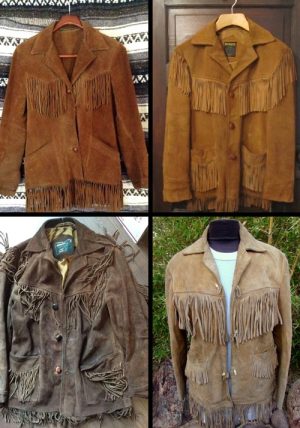
1. Vintage suede fringe jacket. The older and grodier the jacket, the better. Search eBay or used clothing stores for a vintage suede fringe jacket. This is an assortment of jackets we found on eBay:
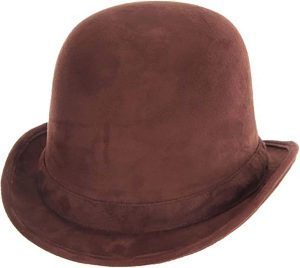
2. Brown derby hat. Also called a bowler hat. This, rather than the Stetson, was actually everybody’s favorite hat in the Wild West. But people wore all kinds of hats, and a slouch hat or cowboy hat would also work.
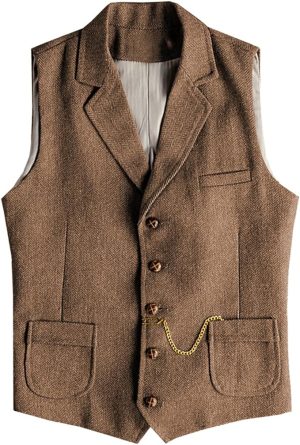
3. Tweed waistcoat. You need some kind of waistcoat or vest; either get a relatively inexpensive vest like this, haunt the thrift stores, or raid a family member’s closet. You can also make do with a button-up sweater vest or sweater. No kidding: Billy the Kid was wearing a cardigan in his studio portrait.
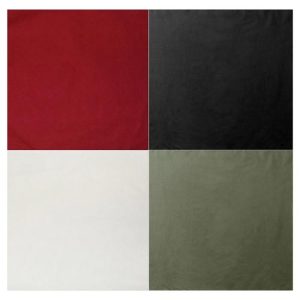
4. Pack of four jumbo bandanas. These are 27″ square bandanas in muted colors: white, olive drab, black, and red. Use one as an ascot and maybe tuck another one in your pocket.
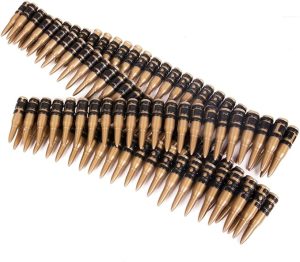
5. Bandolier bullet belt. It’s 60 inches long, so it’s enough to sling around your body.
Pants: We recommend jeans or khakis. You can look for fringed suede pants, but they’re expensive.
Shirt: Wear a plain men’s work shirt or a plaid shirt.
Extra credit: Carry an empty whiskey bottle!

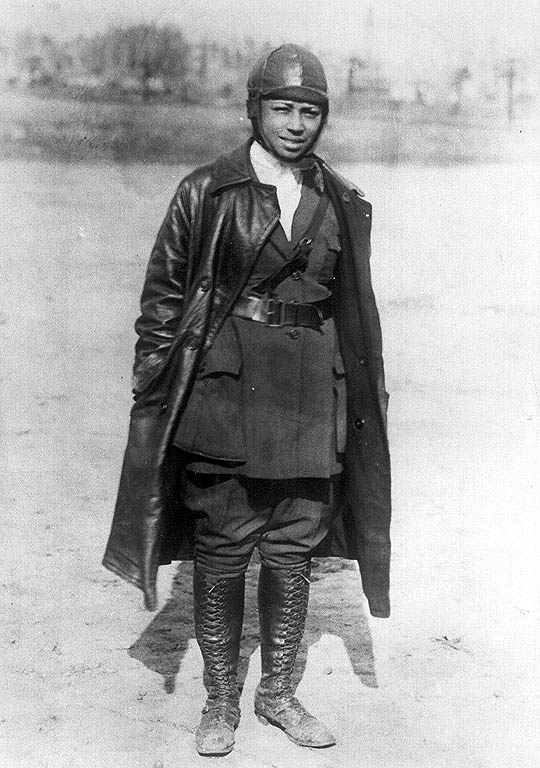
Aviation pioneer Bessie Coleman (1892-1926) was the first black woman in the world to earn a pilot’s license. The child of sharecroppers in Texas, she overcame incredible odds—poverty, racism, sexism—to pursue her dream of flight. Inspired by the exploits of World War I’s flying aces, she set her sights on becoming a pilot herself. She saved up until she could go to France for flying lessons (no American aviation school would accept her), and returned home a sensation. Coleman became a huge star on the barnstormer circuit, thrilling audiences with her bravery, her skill, and her glamorous image. Her self-designed uniform set the pattern for female aviators: a military jacket and breeches, an officer’s belt, a leather helmet with goggles, a silk scarf, and a long leather overcoat.
Tragically, Bessie Coleman was killed in a flying accident in 1926. But her legacy influenced generations of African Americans, including the Tuskegee Airmen. When astronaut Mae Jemison made history as the first black woman in space, she was carrying a photograph of Bessie Coleman with her.
To dress like Bessie, you’ll want to get as close as you can to the look of a World War I officer’s uniform—plus, of course, an aviator cap and goggles. Here she is in a photograph from around 1922:
These are the items you need:
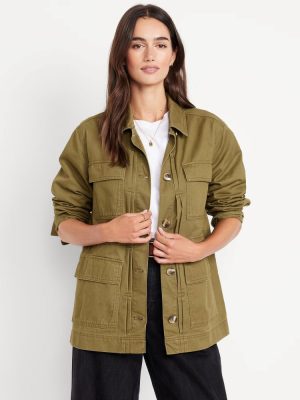
1. Vintage-style Army jacket. You can hunt for an old army surplus jacket on eBay or Etsy, or get a new retro style jacket like this from Old Navy. Ideally you’ll want it large enough that you can button it closed all the way in front. Then just wear a white button-down shirt underneath with a tie or cravat. If you can’t find a military-style jacket, you could also go with a short trench coat in olive drab or khaki.
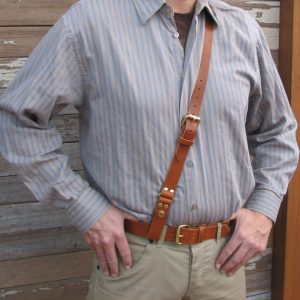
2. Sam Browne belt in brown leather. So who was Sam Browne? He’s the guy who invented that cool-looking belt with the cross shoulder strap, which was quite the military fashion statement in the World War I era. Unfortunately they’re kind of expensive nowadays. New ones are available on Etsy or from specialty supply stores; vintage army surplus Sam Brownes can usually be found on eBay. You can also rig up your own by cobbling a couple of belts together: Sam Browne Steampunk Belt on Instructables.
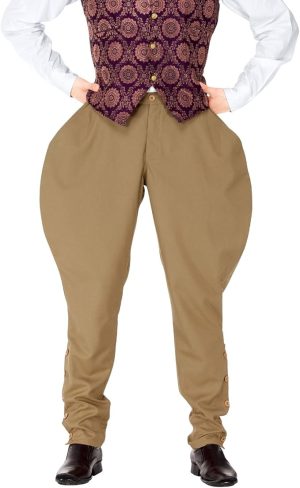
3. Jodhpur-style breeches. These khaki costume jodhpurs are a good choice to simulate the look of World War I breeches.
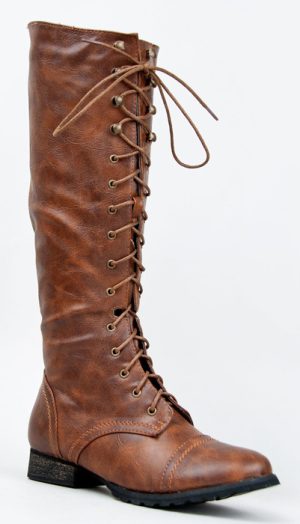
4. Military-style lace-up boots in brown. You can usually find knee boots on Amazon that have this kind of style.
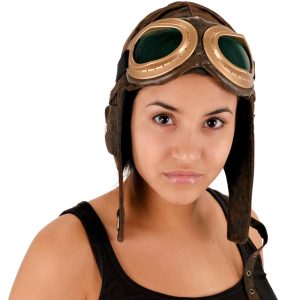
5. Costume aviator hat. Note that this is just the hat; you have to get the goggles separately (next).
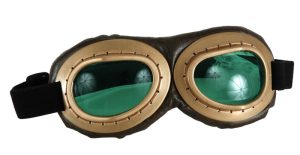
Overcoat: For cold weather Bessie wore a long leather coat over the rest of her outfit. You may not need the extra layer, but a leather or faux leather trench coat would fit the bill.
Aviator’s white silk scarf: If you don’t already have a white silk scarf you can use, this is the genuine article. That same store also carries real leather aviator hats and reproduction goggles—not costume shop stuff—if you’re looking for authentic gear.
Learn more: The Smithsonian documentary Black Wings has a very nice segment on Bessie Coleman:
And in the WTTW-PBS documentary Chicago Stories (view the clip on the PBS site), biographer Doris Rich talks a little bit about Coleman’s flying uniform and the glamorous, modern image she presented.
Main illustration credits: The beautiful painting of Bessie Coleman is by John de la Vega, and was commissioned by the Wright Brothers Memorial Museum in Kill Devil Hills, North Carolina. The newspaper and publicity photographs of Coleman date from between 1922 and 1925. Her pilot’s license is a facsimile based on the photos in the Smithsonian collection. The photograph of a World War I British officer’s uniform, which is extremely similar to the outfit Bessie Coleman designed for herself, is from the Museum of the Manchester Regiment in Ashton-under-Lyne, UK. The photo was contributed by Graham Cook to the Clash of Steel online gallery of military uniforms.

Sojourner Truth (1797-1883) was one of America’s greatest heroines. Born into slavery in New York, she became a powerful voice for abolition and women’s rights. Her most famous speech—“Ain’t I A Woman?”—was delivered at the Ohio Women’s Rights Convention in 1851. For the next 30 years she remained a key participant in the national debate over abolition, voting rights, and women’s equality.
For the costume, here are the pieces we suggest:
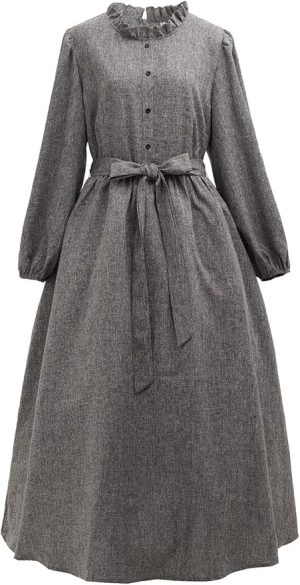
1. Pioneer dress in gray. The simple homespun look of this dress is very appropriate. Don’t tie the front in a bow, though!
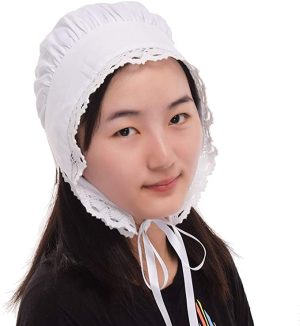
2. White bonnet. This particular one looks pretty similar to the sun bonnet Sojourner wore. You could also do a white head wrap.
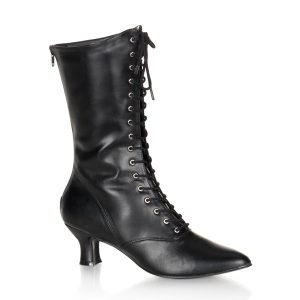
4. White neckerchief. The old Quaker kerchief lives on as chef’s wear! It’s just a rectangle of crisp linen, about 30 x 40 inches, so if you have some old sheets or pillowcases lying around, you can make one yourself. Wrap it around your neck and cross the ends over in front, then secure it with a safety pin.

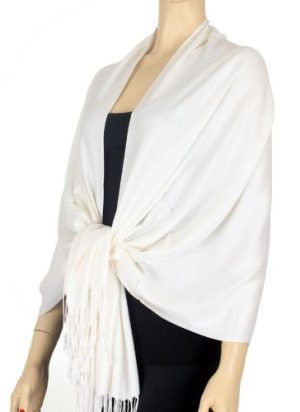
5. White shawl with fringe. This is a beautiful shawl and the price is great.
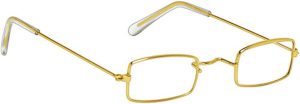
6. Granny glasses. These wire frame spectacles are a reasonably good match for the ones Sojourner wore.

“Lady Day is unquestionably the most important influence on American popular singing in the last twenty years,” said Frank Sinatra back in 1958, and he was right. Billie Holiday (1915-1959) changed the way music was sung, and everybody who has come along since is in her debt.
Billie’s life was difficult, but her style was unfailingly glamorous: evening gowns (often of white satin), opera-length gloves, a gardenia in her hair, and fabulous jewelry. Her career spanned the 1930s, 40s, and 50s, so you can pick the era you like for your costume. We’re opting here for her 1950s look, with an elegant strapless gown. The pieces we suggest:
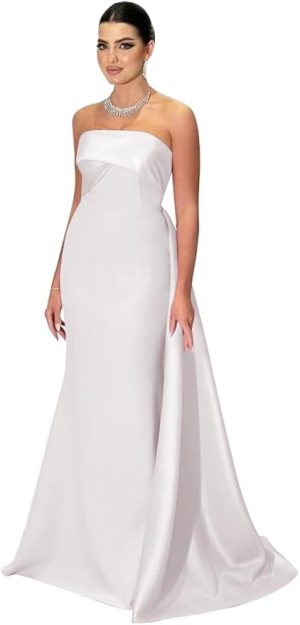
1. White satin gown. The style of this dress is very reminiscent of the gowns Miss Holiday was wearing in the late 50s, including the lovely bodice sash that extends into a quasi-train.
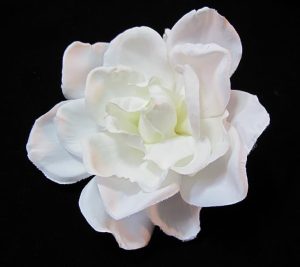
2. Silk gardenia hair clip. Lady Day’s trademark gardenia is a must for your hair. You can usually find these on Etsy or in a store that sells a wide range of silk flowers (especially if they have a wedding section).
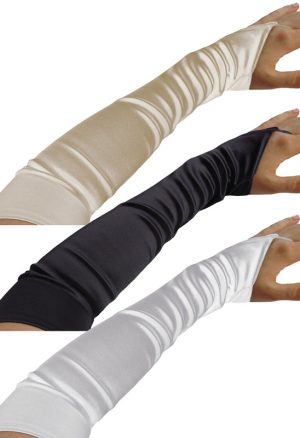
3. Long satin fingerless gloves. Billie Holiday was almost as famous for her gloves as for her gardenias. She liked elbow-length fingerless gloves, chosen in a shade to match her outfit.
4. Rhinestone necklace and earring set.